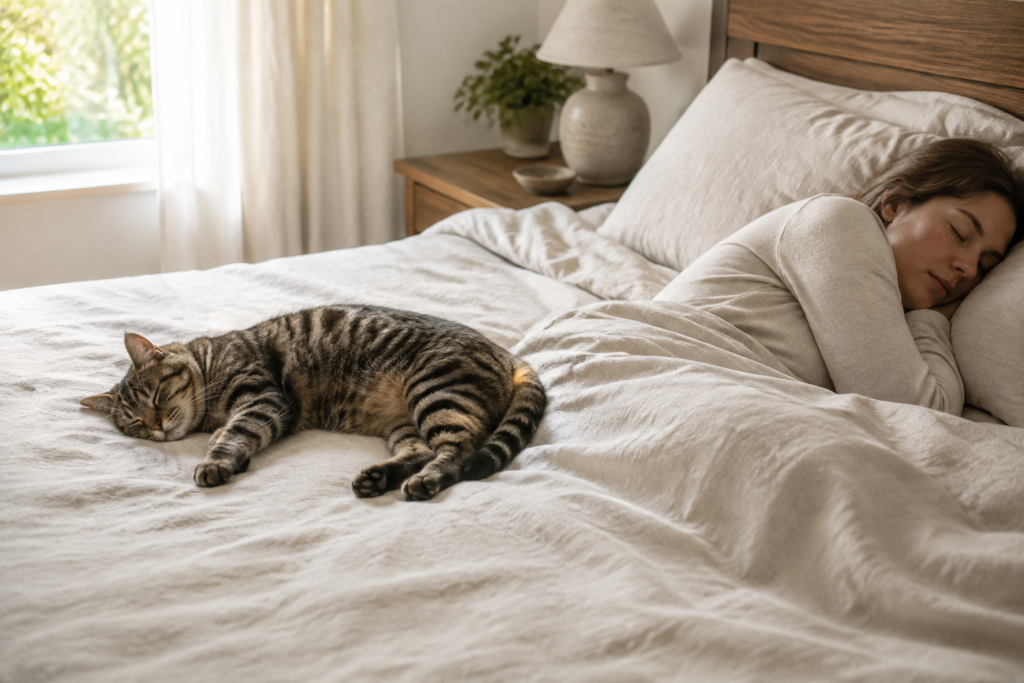
If your cat sleeps right beside you but avoids touching you, it can feel a little confusing. They chose your bed, your room, or the space next to you — but left a small gap. The good news is that this is usually a sign of comfort, trust, and personal preference, not rejection.
Cats show affection in different ways. Some love sleeping on a person; others prefer being close enough to feel safe while keeping a little space of their own.
They feel safe near you
Sleep is a vulnerable time for cats. Choosing to sleep beside you means your cat feels secure in your presence. They may enjoy your familiar scent, the warmth of the room, and the predictable routine you create at bedtime.
That small distance can still be affectionate. Many cats like to stay close while keeping an easy route away if they wake up startled or simply want to change position.
Your cat may prefer space while resting
Not every cat enjoys body contact while asleep. Some cats become warm quickly, dislike being moved, or wake easily when someone turns over. Sleeping beside you lets them share the space without the risk of being disturbed.
This is especially common in independent cats. They may ask for attention during the day, then choose a calm, nearby spot at night.
Temperature can make a difference
Cats look for warmth, but they can also get too warm. If your cat starts on the bed and later moves a few inches away, they may simply be finding the most comfortable temperature.
A cat who sleeps beside your legs, near your pillow, or at the edge of the bed may be balancing warmth with enough room to stretch out. If your cat prefers your pillow specifically, read why cats sleep on pillows for more common reasons.
It can be part of your cat’s routine
Cats are creatures of habit. Once they find a sleeping spot that feels safe, quiet, and comfortable, they often return to it every night. Your cat may have decided that the space beside you is their ideal place — close to you, but still completely theirs.
They may also move around during the night. A cat who starts beside you might later settle on your chest, near your face, or at the foot of the bed depending on warmth and noise. For more on that behavior, see why cats sit on your chest while you sleep.
Being close is not the same as wanting to be held
Cats often set very clear boundaries around touch. Your cat can love you, trust you, and want to be near you without wanting cuddles at that exact moment. It is similar to a cat sitting next to you rather than on your lap: proximity can be their preferred way of showing affection.
If that sounds familiar, our guide on why your cat sits next to you but not on your lap explains why closeness and cuddling are not always the same thing.
When should you pay attention?
A preference for sleeping nearby is normal. However, take note if your cat suddenly avoids all contact, hides more than usual, seems sore when touched, stops eating, or changes their sleeping habits at the same time as other behavior changes. Cats can become more distant when they feel stressed or unwell.
If the change is sudden or you notice signs of pain or illness, contact your veterinarian. Otherwise, let your cat choose their spot and enjoy the fact that they want to share their resting space with you.
How to help your cat feel comfortable near you
- Let them choose their own sleeping position.
- Avoid pulling them closer or holding them when they move away.
- Keep the bedtime routine calm and predictable.
- Offer a soft blanket or cat bed nearby if they like their own space.
- Use gentle affection when your cat is awake and asking for it.
Over time, some cats become more cuddly as they learn that their boundaries are respected. Others will always be “next-to-you” cats — and that is still a very real form of trust.
Why Some Cats Prefer Nearby Space
A cat can feel deeply connected to you without wanting to sleep on top of you. Resting beside you lets your cat share your warmth, scent, and familiar routine while still controlling how much physical contact they receive. This balance is especially common in cats that become warm easily, startle easily, or prefer to move freely while they sleep.
Your cat may also choose the space beside you because it offers a quick view of the room. Cats often relax more when they can notice sounds, movement, and changes around them. A nearby position can provide emotional security without making them feel trapped under an arm, blanket, or restless body.
How to build closeness without forcing contact
The best way to encourage trust is to make closeness predictable and optional. Keep a soft blanket or bed beside you, avoid pulling your cat against you, and let them leave whenever they want. Offer gentle petting when your cat approaches or shows relaxed body language, such as slow blinking, a loose posture, or a gently resting tail.
Over time, respecting these boundaries can make some cats more comfortable with brief contact. Others will always prefer sleeping next to you rather than on you. That preference is not rejection; it is simply the way they feel safest while resting.
FAQs
Why does my cat sleep next to me but not touch me?
Your cat likely feels safe with you but prefers a little space while resting. They may want closeness, warmth, and your familiar presence without direct body contact.
Does my cat sleeping near me mean they love me?
It can be a strong sign of trust and affection. Cats usually choose sleeping areas where they feel secure, especially when they are close to a person.
Why does my cat sleep beside me instead of on me?
Your cat may find direct contact too warm, uncomfortable, or easy to disturb. Sleeping beside you can be the perfect balance of comfort and independence.
If your cat kneads the blanket or your body before sleeping nearby, read why cats knead their people.