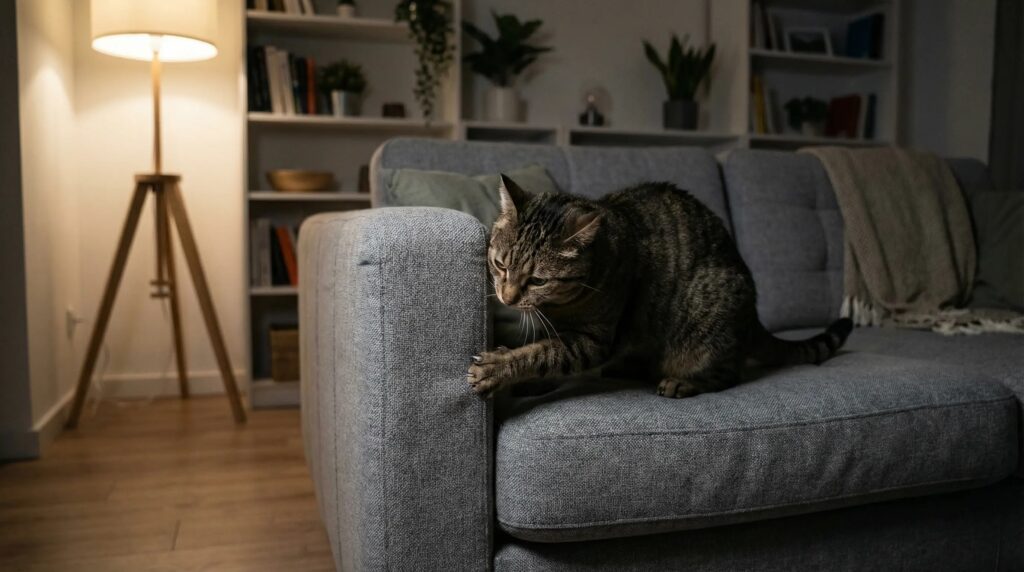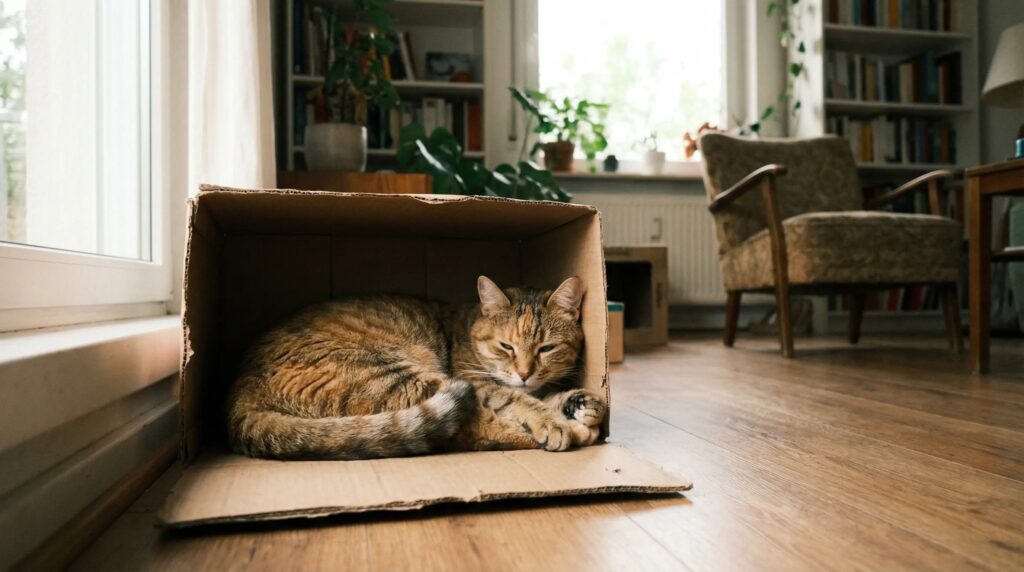
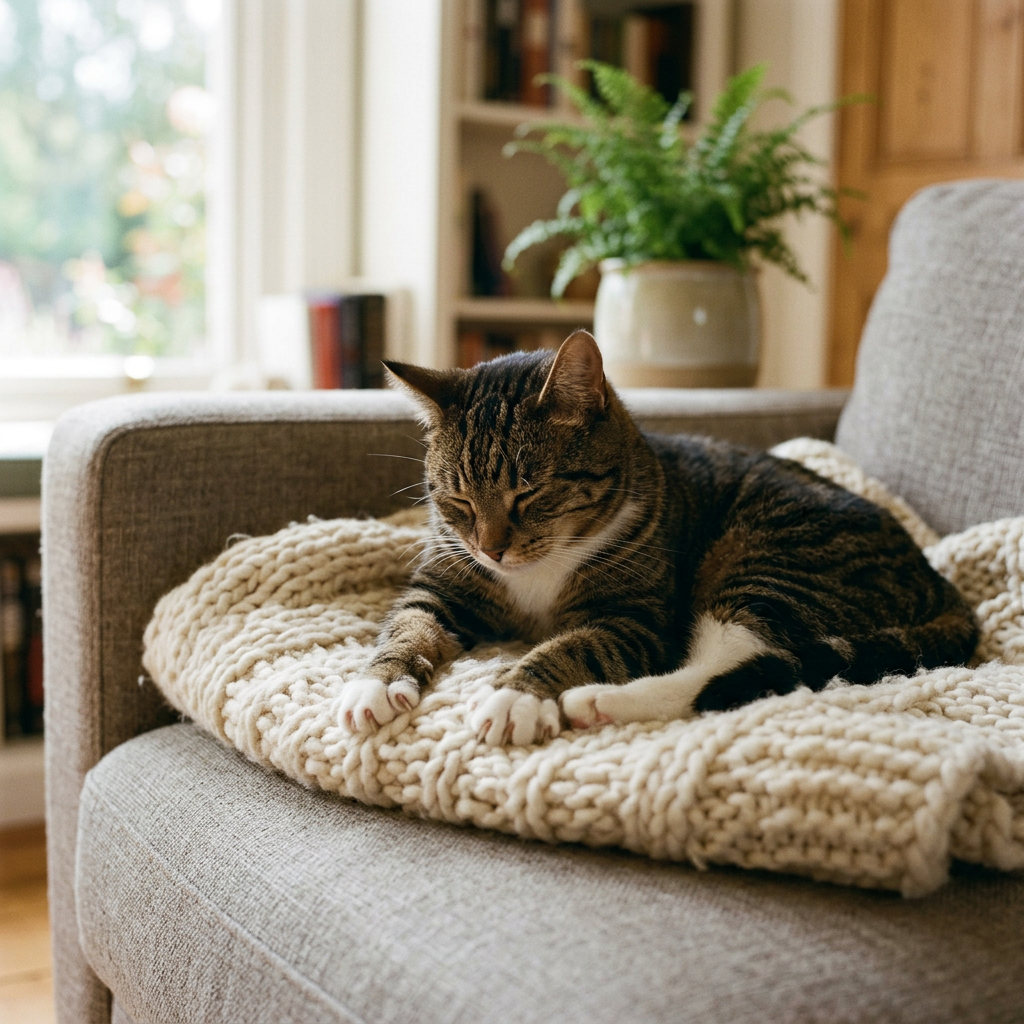
If your cat rhythmically pushes their front paws into a blanket, your lap, or the sofa, you are seeing kneading — one of the most familiar and endearing cat behaviors. In most cases, a cat that kneads is comfortable, relaxed, and feeling safe.
Why do cats knead?
Kittens knead their mother’s belly while nursing. The movement helps stimulate milk flow and becomes associated with warmth and security. Many cats keep this behavior into adulthood because the motion is soothing.
That does not mean your adult cat thinks you are their mother. More likely, the familiar movement helps them settle into a calm state, especially when they are resting beside someone they trust.
Kneading can be a sign of affection
Your cat may knead when they are sitting on your lap, lying beside you, or getting ready for sleep. If they purr, blink slowly, and relax their body at the same time, the message is usually positive.
Cats show affection in different ways. Some prefer to rub against your legs, while others sit nearby without touching you. Kneading is simply one way a cat communicates comfort and social connection.
If your cat often stays close without sitting on you, read why your cat sits next to you but not on your lap.
Your cat may be marking a comfortable place
There are scent glands in a cat’s paw pads. When your cat kneads a blanket, bed, or your clothing, they may leave a familiar scent behind. This can help make a resting place feel safe and familiar.
It is not a sign that your cat is trying to control you. It is a normal behavior that often happens before a cat settles down.
Why does my cat knead my lap?
Your lap is warm, soft, and carries your familiar scent, so it can be an appealing place to relax. Kneading your lap may mean your cat feels safe enough to switch off and enjoy your company.
Some cats knead for a few seconds before curling up. Others continue for several minutes. Both patterns can be normal.
What if kneading hurts?
Even a loving cat can have sharp claws. If kneading is uncomfortable, place a thick blanket between you and your cat rather than pushing them away suddenly. You can also keep their claws trimmed safely or ask a veterinarian or groomer for help.
Try not to punish or shout. Your cat is not trying to hurt you, and a calm redirection protects the trust behind the behavior.
Why does my cat knead and purr?
Kneading and purring often appear together when a cat is content. Purring can also happen when a cat is anxious or uncomfortable, so consider the complete picture: relaxed muscles, normal appetite, comfortable movement, and an ordinary routine all support the idea that your cat is happy.
When kneading changes suddenly
A change in kneading is not automatically a problem. Cats may knead more when they are especially relaxed, or less when their routine changes. However, contact a veterinarian if the change comes with pain, limping, hiding, reduced appetite, unusual vocalizing, or other signs that your cat may be unwell.
If you are also seeing other stress signals, our guide to signs of stress in cats can help you look at the wider pattern.
The bottom line
When your cat kneads, they are usually telling you that they feel safe and comfortable. Give them a soft surface, let them choose the pace of contact, and enjoy this small piece of kitten behavior that many cats carry into adulthood.
Frequently asked questions
Does kneading mean my cat loves me?
It often means your cat feels safe and relaxed with you. Kneading is commonly associated with comfort and social bonding, although every cat has their own way of showing affection.
Why does my cat knead blankets?
Blankets are soft and easy to knead. Your cat may be recreating a comforting motion, leaving a familiar paw scent, or preparing a comfortable place to rest.
Should I stop my cat from kneading?
There is usually no need to stop it. If the claws hurt, quietly add a blanket as a barrier or redirect your cat to a soft bed without punishment.