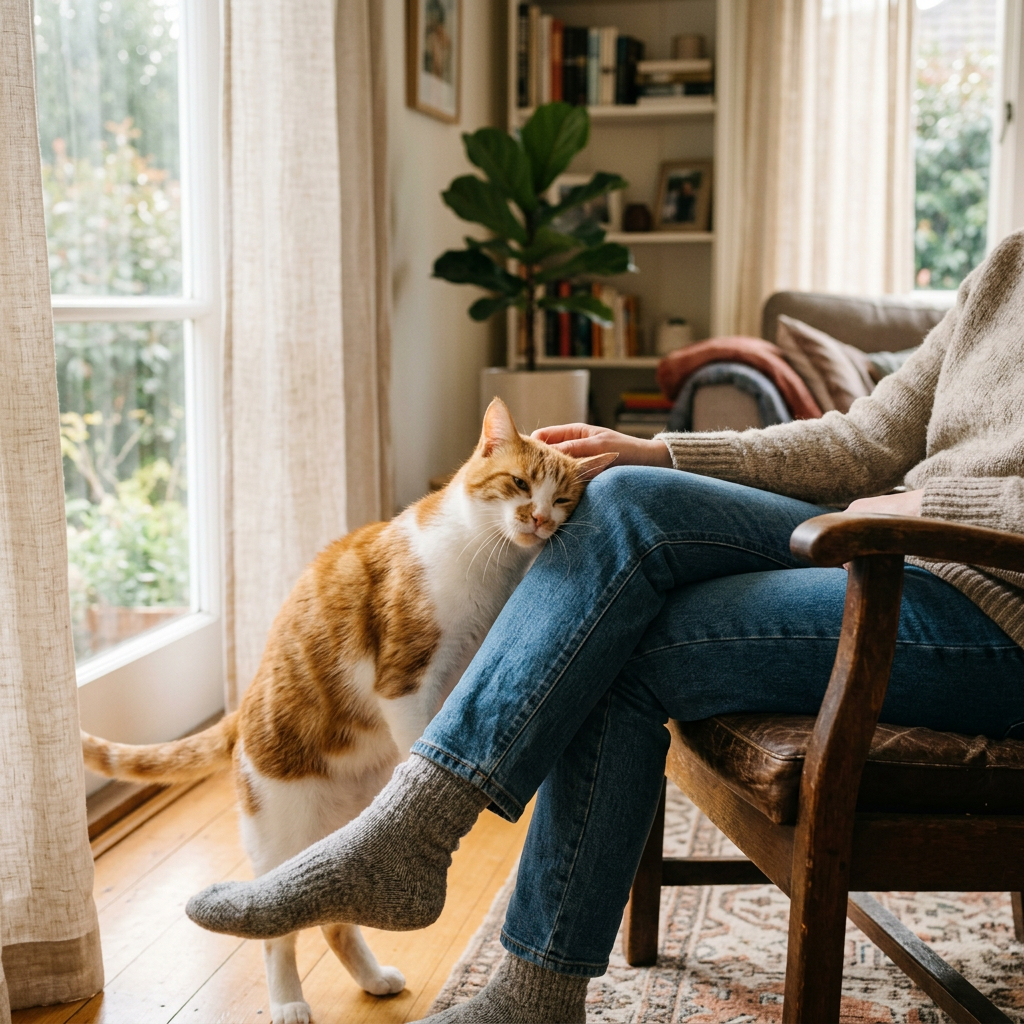
If your cat presses their cheek against your leg, bumps their head into your hand, or winds around your ankles, you are probably seeing one of the friendliest forms of cat communication. In most cases, a cat that rubs against you is showing comfort, familiarity, and trust.
But rubbing is not only about affection. Cats also use scent to make sense of their world. That little cheek rub can be their way of saying, “You are part of my safe space.”
Your cat is leaving a familiar scent
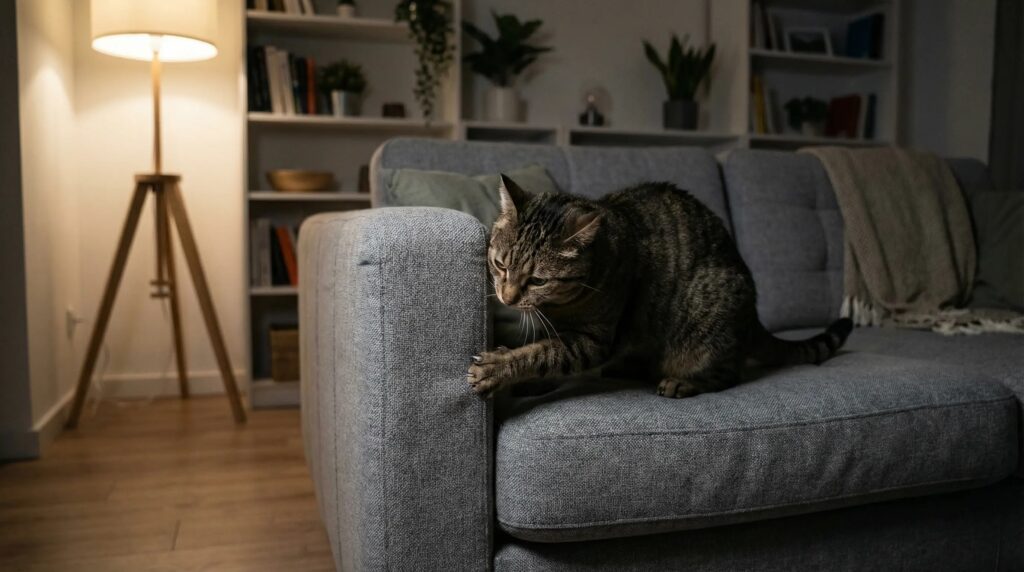
Cats have scent glands around their cheeks, chin, forehead, and the base of their tail. When they rub against you, furniture, or a doorway, they leave behind a personal scent signal called a pheromone.
This is a normal, gentle form of marking. It is very different from spraying urine, which can point to stress, territory concerns, or a health issue. Cheek rubbing is usually a calm behavior that helps a cat make their environment feel familiar.
When your cat rubs against you, they may be mixing their scent with yours. For a social cat, that is a sign that you belong in their trusted group.
It can be a sign of affection and trust
Many cats rub against the people they feel safest with. You may notice it when you come home, sit down on the sofa, or wake up in the morning. Your cat is greeting you in a way that feels natural to them.
That does not mean every cat who rubs wants a long cuddle. Cats have different preferences about touch. Some enjoy a quick cheek rub and then walk away, while others stay close, purr, or ask for petting. A cat who chooses to be near you is often showing affection even if they are not a lap cat.
If your cat likes to sit beside you but avoids your lap, you may also enjoy why your cat sits next to you but not on your lap.
They may be saying hello
Rubbing is one of the most common cat greetings. Your cat may approach with their tail up, brush their body against your legs, and rub their face on you. This is usually a relaxed and friendly hello.
Pay attention to the rest of their body language:
- A tail held upright, soft eyes, and relaxed ears usually mean your cat feels comfortable.
- Slow blinking, purring, or gentle head bumps often add to the friendly message.
- Flattened ears, a twitching tail, or a tense body can mean your cat needs space, even if they have come close.
Sometimes your cat is asking for something
Your cat may rub against you just before mealtime, when they want a door opened, or when they are ready to play. They have learned that approaching you gets your attention.
Look at the situation around the rubbing. If it happens near the food bowl at the same time each day, your cat may be reminding you about dinner. If it happens by a window or toy basket, they may want stimulation or company.
For cats who seem restless at home, interactive toys for bored indoor cats can be a useful next step.
Why does my cat rub against me and then bite?
Some cats rub against you because they want interaction, but become overstimulated if petting lasts too long or happens in a sensitive area. This does not necessarily mean your cat has suddenly become aggressive.
Try keeping petting short and gentle, especially around the cheeks, chin, and shoulders where many cats are most comfortable. Watch for signs that they have had enough, such as skin rippling, a swishing tail, turning their head toward your hand, or tense ears.
If this happens often, read why cats bite when you pet them for simple ways to understand their limits.
When rubbing could need attention
Normal rubbing is gentle and occasional. It is worth paying closer attention if your cat suddenly starts rubbing their face obsessively, seems uncomfortable, scratches at their ears, has eye discharge, drools, or stops eating normally. These changes can sometimes be linked to irritation, dental discomfort, or another health concern.
If the behavior is new, intense, or comes with other symptoms, contact a veterinarian. It is always better to check than to assume a sudden change is only a personality quirk.
The bottom line
When your cat rubs against you, it is usually a very positive sign. They are greeting you, sharing their scent, and treating you as part of a familiar and safe world. The best response is simple: let them set the pace, offer a gentle cheek scratch if they enjoy it, and appreciate the compliment.
Frequently asked questions
Why does my cat rub their face on me?
Your cat has scent glands on their cheeks and forehead. Rubbing their face on you is usually a friendly way to leave a familiar scent and show that they feel safe around you.
Does a cat rubbing against you mean they love you?
It often shows trust and social bonding. Cats can also rub to greet you or ask for attention, so it is best to read the behavior alongside their body language and routine.
Why does my cat rub against my legs when I get home?
This is commonly a greeting. Your cat may be happy to see you, refreshing their familiar scent, and asking for attention after you have been away.