Short answer: A bored cat usually lacks enough mental, physical, or social stimulation in daily life. Indoor cats may show boredom by meowing, scratching, following people, sleeping all day, begging for food, or becoming restless at night. The best solution is not constant entertainment; it is a predictable routine that lets your cat play, explore, climb, hunt, and rest.
What boredom in cats really means
Cat boredom is not laziness. Cats are curious animals with strong instincts to stalk, chase, climb, scratch, explore, and observe their surroundings. When those instincts have nowhere to go, the cat still has energy and curiosity, but no useful outlet.
That unused energy often appears as behaviour that feels inconvenient to people. A cat may demand attention while you work, knock objects off a shelf, race through the house at night, scratch the sofa, or act unusually focused on food. These behaviours are often communication, not a cat trying to be difficult.
Understanding the pattern is more useful than punishing the behaviour. For a broader overview, see How to Fix Common Cat Behavior Problems at Home.
Signs your cat may be bored
No single sign proves boredom. Look for a pattern that repeats when your cat has long, inactive periods or when you are unavailable.
- Excessive meowing or demanding attention
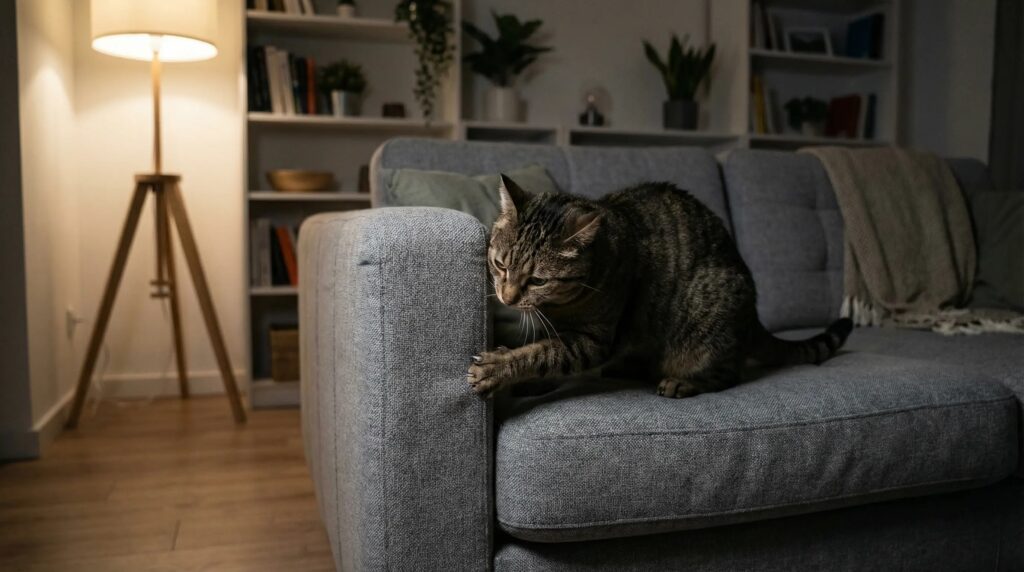
- Scratching furniture or knocking things over
- Following you from room to room
- Restlessness, especially in the evening
- Sleeping for very long periods, then sudden bursts of energy
- Begging for food or treats soon after eating
- Over-grooming, chewing items, or playing roughly
A bored cat may also seem clingy. If your cat has become extra attached suddenly, consider other causes too, including stress or illness. A change that is abrupt or paired with appetite, litter-box, or energy changes deserves attention.
Why indoor cats get bored
There is little to hunt or explore
Outdoor cats encounter changing smells, sounds, movement, and places to investigate. Indoor cats are safer, but their environment can become very predictable. The same rooms, toys, and views may not offer enough challenge every day.
That does not mean indoor cats need to go outside unsupervised. It means their indoor space needs opportunities to use natural behaviour safely.
The routine has no active moments
A cat can spend many hours resting, but they still need short periods of focused activity. If meals arrive in a bowl and toys sit unused on the floor, the day can feel repetitive. A five- or ten-minute active play session is usually more valuable than leaving many toys out all the time.
Food is the only exciting event
When food is the main thing that changes during the day, some cats become intensely food-focused. They may ask for meals early, stare at cupboards, or seem hungry all the time. Food puzzles and play before meals can help. See Why Is My Cat Always Hungry? for a practical guide to that pattern.
How boredom leads to problem behaviours
Boredom does not create a bad cat. It increases the chance that a normal instinct is expressed in an inconvenient place or at an inconvenient time.
A cat with unused energy may scratch the couch because it is stable, textured, and located where the family spends time. They may wake you because dawn and dusk are naturally active periods. They may meow because it reliably gets a person to react.
If furniture is the main target, read Why Do Cats Scratch Furniture and How to Stop It. Redirection works better than punishment because scratching is a real need, not a habit that can simply be removed.
What actually helps a bored cat
Use short interactive play sessions
Use a wand toy, ribbon toy, or another safe toy that moves like prey. Let your cat watch, stalk, chase, and catch it. Slow the toy down sometimes instead of moving it constantly; real prey does not move in circles without stopping.
Ten focused minutes once or twice a day can be enough for many adult cats. Kittens and energetic young cats may need more. End the game with a catch and then offer a small meal or part of a meal. This creates a satisfying hunt, eat, rest sequence.
Rotate toys instead of leaving everything out
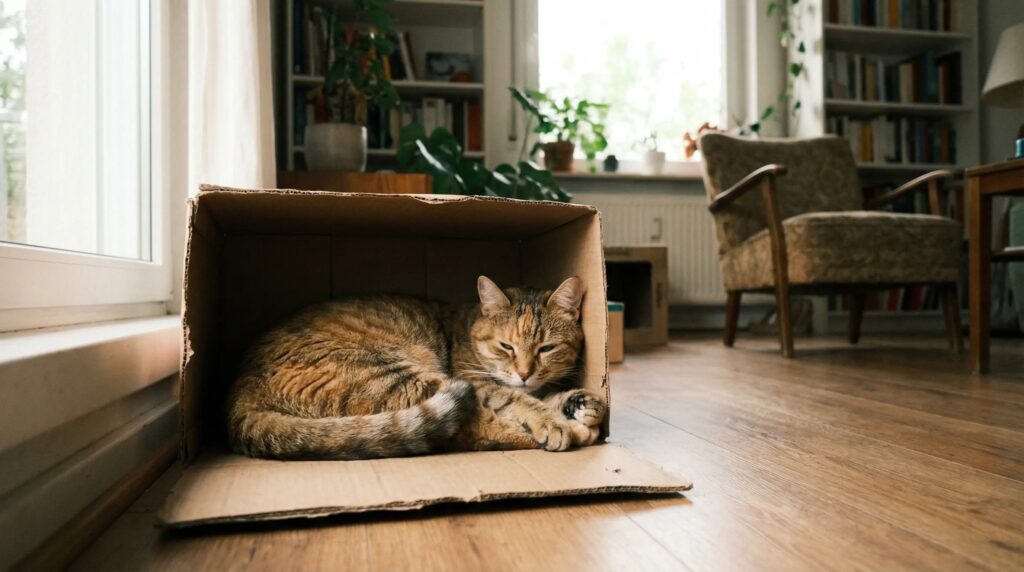
A toy that is always available becomes part of the background. Keep a small selection out, then swap them every few days. Cardboard boxes, paper bags with handles removed, tunnel toys, balls, and simple kicker toys can all feel new again when they reappear.
If you are comparing toy types, our guide to interactive toys for bored indoor cats explains the options and their safety considerations; buying more is not always the answer.
Create vertical space
Many cats enjoy observing a room from above. A stable cat tree, shelf, window perch, or cleared bookcase level can provide exercise and a sense of control. Place climbing areas where there is something interesting to watch, but make sure they are safe and secure.
Give your cat safe things to watch
A window view can be enriching when it does not create frustration. A perch facing birds, people, or trees gives many cats quiet stimulation. If outdoor cats are causing distress, close the view at times and focus on indoor play instead.
If window watching comes with clicks or chirps, our guide to why cats chirp at birds explains how to interpret the sound alongside body language.
Use food puzzles carefully
Food puzzles make a small part of the daily ration more engaging. Start with an easy puzzle so your cat understands it quickly. The aim is to add a small hunting-style task, not to make meals difficult or frustrating.
A simple daily routine
Consistency matters more than creating a different activity every hour. A simple routine can look like this:
- Morning: brief play followed by breakfast
- Daytime: a safe perch, resting spot, and one quiet toy
- Evening: interactive play before the main meal
- Night: a calm environment and no reward for attention-seeking meows
Adjust the routine to your household. The important part is that your cat can predict when active attention and meals will happen.
Common mistakes cat owners make
Using food instead of stimulation
Extra treats can stop a demanding cat for a moment, but they may make food-seeking stronger. When possible, offer play, a puzzle, or a calm interaction before assuming the request is hunger.
Buying many toys but not playing
Most cats are interested in movement and interaction, not just the object itself. A toy on the floor may be ignored; the same toy moved slowly by you may become exciting.
Playing only when the cat is already disruptive
If play begins only after your cat attacks the curtains or wakes you at night, the cat may learn that disruptive behaviour starts a fun game. Offer play before the usual problem time instead.
Punishing normal instincts
Shouting, spraying water, or physically moving a cat away can increase stress without teaching an alternative. Redirect scratching to a suitable post, guide play toward toys, and reward the behaviour you want to see.
When boredom may not be the real issue
Do not assume a sudden behaviour change is boredom. A cat who becomes withdrawn, unusually clingy, aggressive, confused, or less active may be stressed or unwell. Pain and illness can look like a lack of interest or unusual behaviour.
Talk to a veterinarian if changes are sudden, intense, or paired with weight loss, vomiting, increased thirst, changes in appetite, litter-box changes, or signs of pain. A healthy enrichment plan is useful, but it does not replace medical care.
Frequently asked questions
Can a cat be bored if they sleep all day?
Yes. Cats naturally sleep a lot, but a bored cat may sleep through an inactive day and then become energetic when you are trying to rest. Short play sessions around dawn, dusk, or before bed can help.
How long does it take to reduce boredom?
Some cats become calmer within a week of a consistent routine. Others need more time, particularly if food begging or nighttime activity has been rewarded for months. Make changes gradually and keep them consistent.
Do two cats keep each other entertained?
Sometimes, but not always. Cats have individual social preferences, and a second cat can create stress if introductions are rushed. Do not adopt another cat solely as an entertainment plan without considering personality, space, and a careful introduction.
Why is my bored cat most active at night?
Cats are naturally more active around dawn and dusk. If they have slept through the day without enough stimulation, that energy may appear when you want to sleep. See Why Is My Cat Meowing at Night? for more help with nighttime behaviour.
Key takeaway
Cat boredom usually comes from unmet needs for play, exploration, climbing, and routine. It can look like meowing, scratching, food-seeking, restlessness, or constant following. The most effective solution is a predictable daily rhythm with short interactive play, rotating enrichment, and safe places to climb and observe. If the behaviour changes suddenly or comes with physical symptoms, contact a veterinarian.
Make the home easier to explore
Enrichment does not need to mean buying expensive equipment. Small changes can make a familiar room feel more interesting. Put a cardboard box in a new safe spot, offer a blanket-covered chair, move a perch to a different window, or hide a few pieces of dry food in easy locations. Change only one or two things at a time so your cat can investigate without feeling overwhelmed.
Scent can be enriching too. A clean box, a paper bag with handles removed, cat-safe silvervine, or a toy kept away for a few weeks can create novelty. Avoid strong fragrances, essential oils, or anything your cat could swallow. Safety always comes before variety.
Match activities to your cat’s personality
Not every cat enjoys the same type of stimulation. A confident young cat may want energetic chase games. A shy cat may prefer watching a toy move slowly from behind a chair. An older cat may enjoy gentle movement, a warm perch, and a food puzzle that does not require jumping.
Notice what makes your cat focus. Do they watch birds, hide in boxes, chase a ribbon, climb high, or investigate new objects? Build around those preferences. Enrichment works best when it feels like an opportunity, not a task forced on the cat.
For a nervous cat, make choices available. Put a toy nearby rather than pushing it toward them. Let them approach a new object at their own pace. If they walk away, try later. Pressure can turn a potentially enjoyable activity into another source of stress.
Help a bored cat when you are away
Most owners cannot play with their cat all day, and that is completely normal. The aim is to make the time between interactions more comfortable and interesting. Set up a safe resting area with a view, rotate a toy before leaving, and leave a simple puzzle feeder only if your cat already understands how to use it.
Consider the length of the day. If your cat is alone for long periods, a morning play session and a reliable evening routine become especially valuable. A pet sitter may also be helpful during travel or unusually long absences, particularly for a social cat.
Do not leave strings, ribbons, hair ties, plastic bags, or toys with small detachable pieces unsupervised. Choose items designed for independent use and check them regularly for damage.
Track progress rather than expecting instant change
Choose one or two changes for the first week. For example, play before dinner and rotate two toys. Then note whether your cat meows less, sleeps more calmly at night, scratches the post more often, or spends more time exploring. Small improvements are meaningful.
If you introduce ten new things at once, it becomes hard to know what helped. A calm, repeatable routine is easier for you and your cat. Increase the challenge only when the current activity has become easy and enjoyable.
What not to do with a bored cat
Do not use hands or feet as toys. It may seem harmless with a kitten, but it teaches the cat that grabbing people is part of play. Use a toy that creates distance between hands and claws instead.
Do not suddenly fill the home with loud toys, visitors, or constant changes. Too much stimulation can be stressful, especially for sensitive cats. Enrichment should offer choice and control.
Do not interpret every quiet day as a problem. Cats have normal rest days. Look for a consistent pattern of frustration or behaviour change rather than expecting a cat to be active every hour.