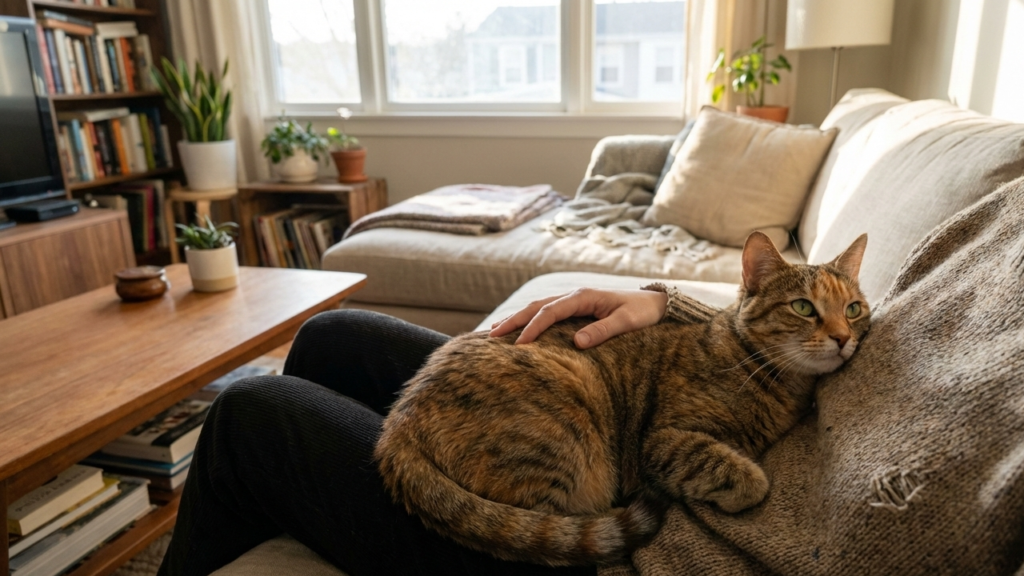
If your cat has suddenly turned into your tiny shadow—following you room to room, sitting on your keyboard, crying when you close a door—you’re probably thinking the same thing:
Why is my cat suddenly clingy?
Sometimes it’s adorable. Sometimes it’s annoying. And sometimes it’s a warning sign that something changed (either in your home, in your cat, or in you).
Cats don’t usually switch personalities overnight “just because.” When they become extra attached, it’s usually communication.
Let’s break it down in a clear, real-life way—without turning this into a veterinary textbook.
Short answer (so you don’t have to scroll)
Most cats become suddenly clingy because they feel insecure, stressed, bored, unwell, or they’ve learned that sticking close gets them attention. The goal is to spot what changed, watch for red flags, and respond calmly with routine, comfort, and structured play.
First: Is It Actually “Clingy” or Just More Social?
Before assuming something is wrong, ask yourself:
- Is this truly new behavior (last few days/weeks)?
- Or has your cat always been affectionate, and you’re just noticing more?
- Is the clinginess constant, or only at certain times (night, before food, when you’re working)?
Many cats have “phases” where they want more closeness. But if it’s a sharp change, it’s worth checking the likely causes below.
Something Changed in the Home (Even If You Think It’s Small)
Cats are routine animals. A change that feels minor to you can feel huge to them.
Examples that commonly trigger clinginess:
- You started a new job schedule
- You’re home more (or less) than before
- A partner/friend moved in or out
- You changed rooms, furniture, or moved the litter tray
- There’s construction noise nearby
- You brought new smells into the house (new detergent, new pet visiting, etc.)
When the environment feels unstable, cats often attach to the most predictable “safe thing” in the home: you.
What to do:
Keep the basics consistent for 7–14 days:
- same feeding times
- same litter location
- same play window
- same bedtime routine
Stability reduces clinginess fast when the trigger is environmental.
Stress or Anxiety (Clinginess Is One Side of It)
Some stressed cats hide. Others do the opposite and become “needy.” Many do both—hiding at first, then clinging later.
Look for stress signs that often appear with clinginess:
- more hiding than usual
- sudden vocalizing (especially at night)
- overgrooming / licking one spot
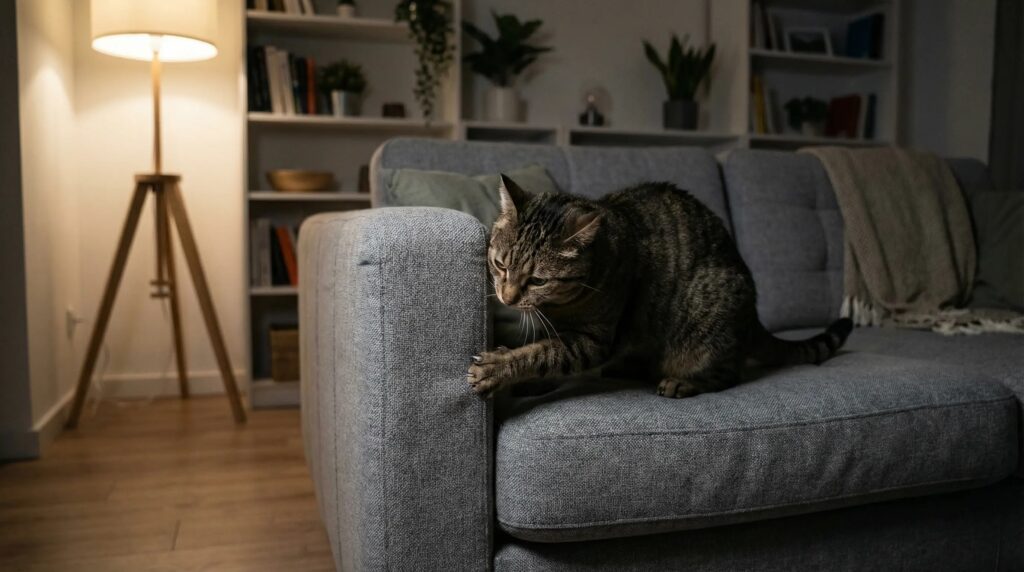
- scratching furniture more
- appetite changes (eating less or suddenly begging more)
- being jumpier than normal
Common stress triggers:
- visitors
- new pet smells
- loud storms
- another cat outside the window
- changes to routine
What to do:
- Reduce stimulation (close blinds if outside cats trigger them)
- Create a “safe base” zone (quiet room + bed + water + litter nearby)
- Add structured play (more on that below)
- Avoid punishment (it increases anxiety)
Boredom: Clingy Doesn’t Always Mean Emotional—Sometimes It Means “Entertain Me”
Indoor cats can get bored easily, especially if:
- play is random and short
- the house is quiet most of the day
- there’s no hunting/foraging activity
A bored cat often becomes clingy because you’re the most interesting thing in the room.
They may:
- sit on you
- interrupt your work
- meow at you constantly
- push objects off surfaces (yes, that’s often boredom)
What to do (simple and effective):
- 10 minutes of play twice a day (same time daily)
- End play with something they can “catch”
- Add a food puzzle or scatter feeding once a day
- Rotate toys instead of leaving everything out
Even a small routine change here can reduce clinginess dramatically.
They Learned It Works (Accidental Training)
This is very common and not your fault.
How it happens:
Your cat follows you → you talk to them → you pet them → you pick them up → you give a treat to calm them.
Your cat learns:
“Being close gets me rewards.”
So they repeat it… and intensify it.
What to do:
You don’t need to ignore your cat completely. Just be smarter about timing.
Try this:
- Give attention when they’re calm and independent
- If they’re clingy-demanding, redirect first (toy, scratch post, treat puzzle), then reward calm behavior
- Use predictable “attention times” (morning cuddle, evening cuddle)
Cats love patterns. Your goal is to create a pattern that doesn’t rely on them constantly chasing you.
Your Cat Doesn’t Feel Well (This One Matters)
Cats can become clingy when they’re uncomfortable or sick.
Some cats hide pain.
Some cats seek safety.
A clingy change can be a quiet “help me” signal.
Extra suspicious if clinginess comes with:
- sleeping more than usual
- moving less / slower
- less grooming
- not jumping up as easily
- appetite change
- litter changes (peeing more/less, accidents)
- bad breath or drooling
- unusual aggression or sensitivity to touch
What to do:
If clinginess is paired with any physical change, don’t “wait and see” for weeks.
Monitor for 24–48 hours and call your vet if it persists or worsens.
You don’t need to panic. But behavior change + physical signs = vet check.
Aging: Senior Cats Often Get More Dependent
Older cats can become clingy because they feel:
- less confident
- more sensitive to noise
- a bit confused at night
- physically uncomfortable
Some cats also develop cognitive changes (like mild confusion) that makes them follow you as an anchor.
Clues it’s age-related:
- your cat seems more needy at night
- they vocalize more in the dark
- they wake more easily
- they stick close in unfamiliar situations
What helps:
- night light (seriously helps many senior cats)
- extra soft bedding in warm areas
- predictable routine
- gentle play and stimulation (shorter sessions)
Hormones, Seasons, and “Random” Cycles
Sometimes clinginess appears during seasonal shifts or hormonal cycles.
This is more common in:
- unspayed/unneutered cats
- cats that respond strongly to daylight changes
- cats that become more cuddly in colder months (warmth-seeking)
If everything else looks normal and the change is mild, it may settle on its own.
They’re Reacting to YOU (Yes, Really)
Cats are observant. If your mood, sleep, or stress changed, your cat often reacts.
They don’t “diagnose anxiety,” but they notice:
- different tone of voice
- different breathing
- different movements
- you being on your phone/laptop more
- you leaving home more
- you sleeping differently
Some cats respond by sticking close because it feels safer.
What to do:
If you’ve had a stressful period, don’t overthink it.
Give your cat:
- predictable routine
- predictable affection
- predictable play
That combination calms both of you.
When Should You Worry? (Red Flags)
Clinginess alone usually isn’t an emergency.
But if your cat is suddenly clingy AND you see any of these, take it seriously:
- not eating / eating much less
- vomiting or diarrhea
- hiding + clingy swings
- litter box changes
- limping or stiffness
- breathing changes
- weight loss
- sudden aggression
- obvious pain when picked up or touched
If any red flag is present: vet.
If no red flags: treat it like communication and test the “routine + play + calm” approach for 7–10 days.
How to Help (Fast, Practical Plan)
Here’s a simple plan that works in most homes.
Step 1: Stabilize the routine
- feed at the same times daily
- keep litter location stable
- same bedtime pattern
Step 2: Add structured play (non-negotiable)
- 10 minutes morning
- 10 minutes evening
Use a wand toy, mimic hunting, end with a “catch.”
Step 3: Add a “calm independence” reward
Whenever your cat is relaxed on a chair/bed by themselves:
- calmly praise
- treat
- slow blink
You’re teaching: independence = good.
Step 4: Create a safe zone
A quiet corner or room with:
- bed
- water
- scratching surface
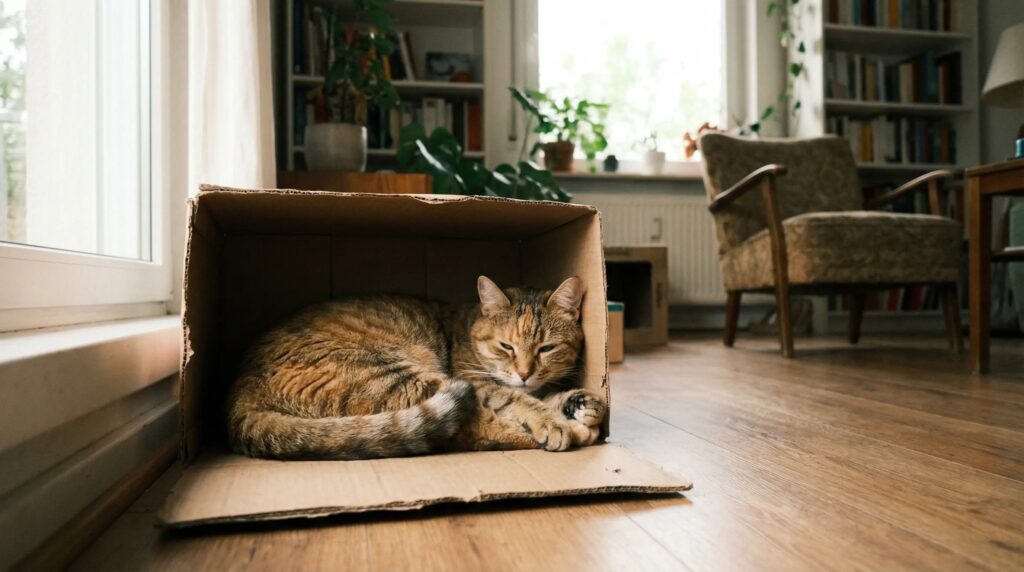
- (optional) a covered box/igloo bed
Step 5: Track patterns for 3 days
Write down:
- when clinginess peaks
- what happens right before it
- whether it’s linked to food, boredom, stress, noise, night
Patterns reveal causes quickly.
Is It Always Bad?
No.
Sometimes your cat is simply bonding more with you.
If your cat is:
- eating normally
- using the litter normally
- playing normally
- sleeping normally
- not showing stress signs
then clinginess may just be a “cuddle phase.”
Cats can be affectionate, and that’s not a problem.
Final takeaway
If you’re asking “why is my cat suddenly clingy,” assume it’s communication, not manipulation.
Most of the time it’s one of these:
- insecurity from change
- stress/anxiety
- boredom
- learned attention-seeking
- feeling unwell
Your job is simple:
Watch for red flags, stabilize the routine, add structured play, and respond calmly.
Cats don’t usually change without a reason.
So the real question isn’t “why are they clingy?”
It’s “what changed recently?”