If you live with a cat, you may have experienced this frustrating situation.
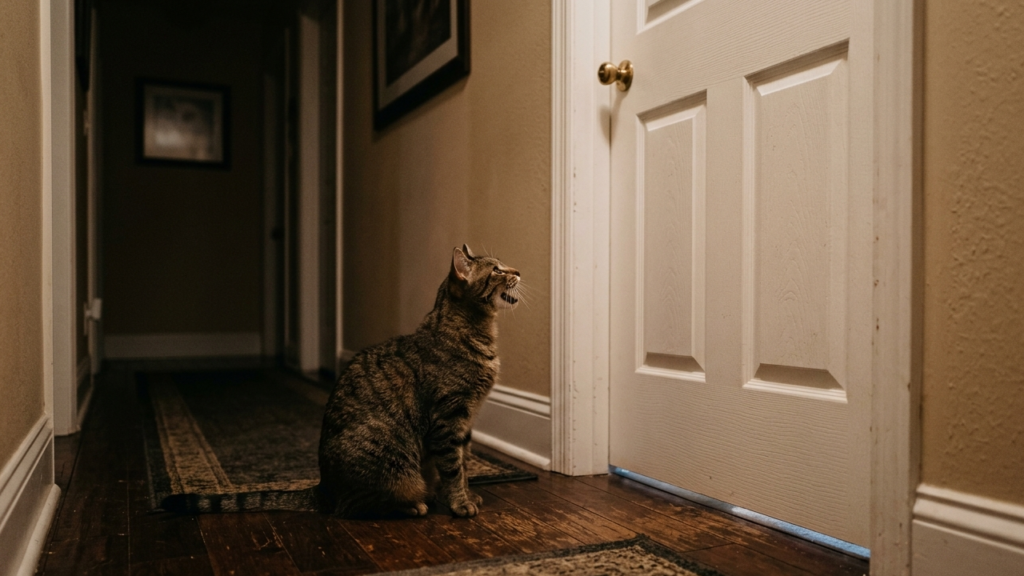
Everything is quiet. You’re asleep or trying to sleep… and suddenly your cat starts meowing loudly somewhere in the house.
Sometimes it’s a soft meow. Other times it’s a long, dramatic yowl that sounds almost like your cat is complaining.
Many cat owners ask the same question:
Why is my cat meowing at night?
The truth is that nighttime vocalization is very common in cats. In most cases, your cat isn’t trying to be annoying or wake you up on purpose. They’re simply following natural instincts or reacting to something in their environment.
Once you understand the reasons behind nighttime meowing, it’s much easier to fix the problem without stress for you or your cat.
In this guide you’ll learn:
- The most common reasons cats meow at night
- Why some cats become more vocal after dark
- How to reduce nighttime activity and noise
- Practical solutions that actually work in real homes
Most importantly, you’ll learn how to solve the problem without punishing your cat.
Why Cats Are Naturally More Active at Night
To understand nighttime meowing, it’s important to know how cats naturally behave.
Domestic cats are crepuscular animals. This means they are most active during:
- early morning (dawn)
- evening (dusk)
These are the times when wild cats would normally hunt.
Even indoor cats still follow this instinctive rhythm. While humans sleep at night, cats may suddenly become more alert, playful, or curious.
If your cat has excess energy or stimulation built up during the day, nighttime is often when it gets released.
This is why many cats run around the house, play, explore, and sometimes vocalize during the night.
The Most Common Reasons Cats Meow at Night
Nighttime meowing usually happens for a reason. Understanding the cause is the first step to solving it.
1. Your cat has too much pent-up energy
This is one of the most common causes.
If your cat spends most of the day sleeping or resting, they may simply have a lot of energy left when nighttime arrives.
Without an outlet for that energy, your cat may:
- run around the house
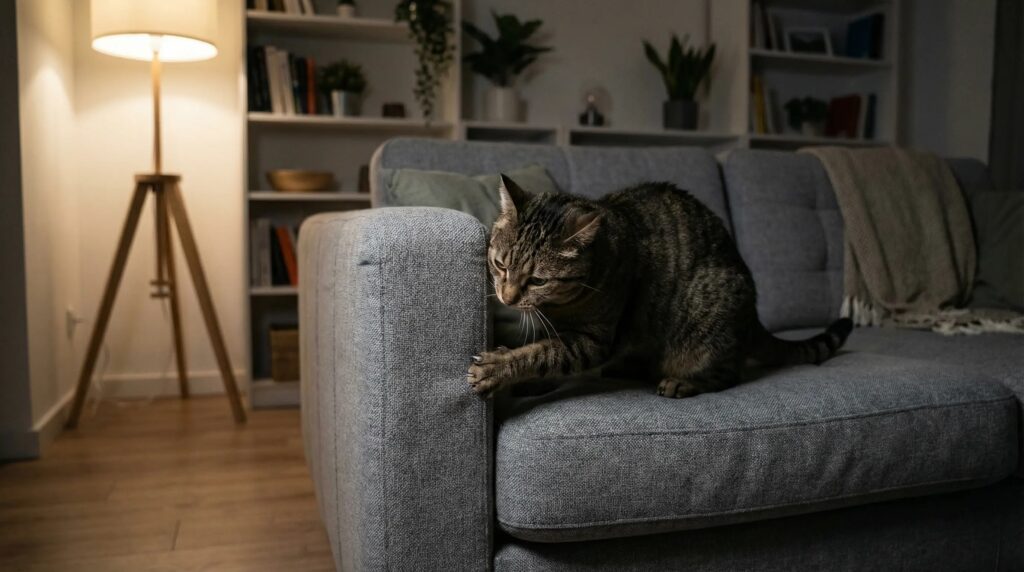
- scratch furniture
- vocalize loudly
- try to wake you up
Adding more playtime during the evening can dramatically reduce this behavior.
2. Your cat is seeking attention
Some cats quickly learn that meowing at night gets a response from their owners.
If you get up, talk to your cat, feed them, or interact with them, the cat learns that nighttime meowing works.
Even negative attention can reinforce the behavior.
Over time, the cat may repeat the behavior because it successfully gets your attention.
3. Hunger or feeding routine
Cats that are fed very early in the morning sometimes start waking their owners before feeding time.
Your cat may begin meowing earlier and earlier each day because they associate you waking up with food.
If your cat usually eats breakfast at a certain time, they may try to wake you up in advance.
4. Environmental stimulation
Sometimes your cat is reacting to things you may not notice.
At night there may be:
- insects near windows
- outdoor animals
- distant noises
- movement outside
Cats have extremely sensitive hearing and vision, so even small changes in the environment can trigger vocalization.
5. Stress or anxiety
Some cats become more vocal when they feel stressed or insecure.
Changes such as moving house, introducing new pets, or changing routines can cause nighttime vocalization.
Understanding the signs of stress in cats can help identify whether anxiety is contributing to the behavior.
6. Age-related changes in older cats
Senior cats sometimes become more vocal at night due to cognitive changes.
Older cats may experience confusion or disorientation in the dark, similar to dementia in humans.
If a previously quiet senior cat suddenly begins vocalizing frequently at night, it may be worth discussing with a veterinarian.
How to Stop Nighttime Meowing
The good news is that most cases of nighttime meowing can be improved with a few simple adjustments.
1. Increase evening playtime
One of the most effective solutions is increasing activity before bedtime.
Try adding a 10-15 minute interactive play session in the evening using toys such as:
- feather wands
- laser pointers
- chase toys
This helps burn off excess energy and encourages your cat to sleep longer afterward.
2. Feed your cat after evening play
Cats naturally follow a cycle:
hunt → eat → groom → sleep
By playing with your cat and then feeding them, you mimic this natural sequence.
After eating, many cats become relaxed and sleepy.
3. Avoid rewarding nighttime noise
If your cat meows at night and you immediately respond, the behavior may continue.
Instead, try to avoid reacting to the vocalization.
This can take time, but once the cat learns that meowing does not produce attention or food, the behavior often decreases.
4. Provide environmental enrichment
Cats that are bored during the day often become more active at night.
Adding stimulation during the day can reduce this.
Examples include:
- window perches
- puzzle feeders
- climbing trees
- rotating toys
Mental stimulation helps reduce nighttime restlessness.
5. Keep a predictable routine
Cats feel safer and calmer when daily routines are predictable.
Try to keep feeding, playtime, and bedtime schedules consistent.
A stable routine helps regulate your cat’s activity levels.
When Nighttime Meowing Might Signal a Problem
While most nighttime meowing is harmless, there are cases where it may indicate a deeper issue.
Possible causes include:
- illness or discomfort
- anxiety
- age-related confusion
- changes in the household environment
If your cat shows multiple behavior changes, reviewing common cat behavior problems at home can help identify the underlying cause.
Common Mistakes That Make Nighttime Meowing Worse
Sometimes owners unintentionally make nighttime meowing worse without realizing it. Small habits can reinforce the behavior and teach a cat that vocalizing at night works.
Responding immediately to every meow
One of the most common mistakes is reacting right away.
If your cat meows and you immediately get up, talk to them, feed them, or play with them, your cat learns something important: meowing gets results.
Even negative attention can reinforce the behavior. From the cat’s perspective, any reaction means the strategy worked.
Breaking this habit can take a few nights of patience, but once the cat learns that nighttime noise doesn’t produce a reward, the behavior often fades.
Free-feeding without a routine
Cats that eat randomly throughout the day sometimes develop unpredictable activity patterns.
Without a clear feeding schedule, their hunger cycle may shift toward nighttime.
Establishing regular meal times—especially feeding after evening play—can help regulate their internal rhythm.
Many cats sleep longer at night when they finish the evening with food.
Lack of stimulation during the day
Indoor cats often sleep most of the day, especially if the home is quiet.
While this may seem normal, it means your cat may wake up with a lot of stored energy.
If a cat has spent the entire day resting, nighttime becomes the perfect moment to explore, play, and vocalize.
Adding stimulation during the day can help balance this.
Examples include:
- puzzle feeders
- window watching spots
- climbing trees
- interactive toys
These activities help your cat stay mentally engaged.
Ignoring stress signals
Sometimes nighttime vocalization is not about energy or hunger, but stress.
Cats may vocalize at night when something in their environment feels uncertain.
Changes like new pets, visitors, moving furniture, or even outdoor animals near the house can make cats uneasy.
Learning to recognize the signs of stress in cats can help owners understand when nighttime meowing is connected to anxiety rather than simple boredom.
Why Some Cats Meow More Than Others
Not all cats vocalize the same way. Some breeds and personalities are naturally more talkative than others. If you’re wondering why cats meow so much, it often depends on personality, environment, and communication habits.
Certain breeds are known for being especially vocal. For example, Siamese cats are famous for communicating frequently with their owners. They often use different types of meows to express needs, curiosity, or frustration.
Other breeds may be much quieter and rarely vocalize unless something unusual happens.
Personality also plays a role. Some cats enjoy interacting with their owners through sounds and will “talk” during the day and sometimes at night.
Environmental factors can also influence how vocal a cat becomes. Cats that receive little stimulation during the day may use vocalization as a way to release energy or seek interaction.
Understanding your individual cat’s personality is important. A cat that is naturally vocal may never be completely silent at night, but with the right routine and enrichment, the behavior can usually be reduced to a manageable level.
The Key Idea to Remember
Most cats that meow at night are not trying to disturb their owners.
They are responding to:
- instinctive activity cycles
- boredom
- hunger
- stress
- learned habits
Once you identify the cause, the solution often becomes much simpler.
Small changes in routine, playtime, and feeding schedules can dramatically reduce nighttime vocalization.
And in many homes, these adjustments lead to a quieter night for both the cat and the owner.