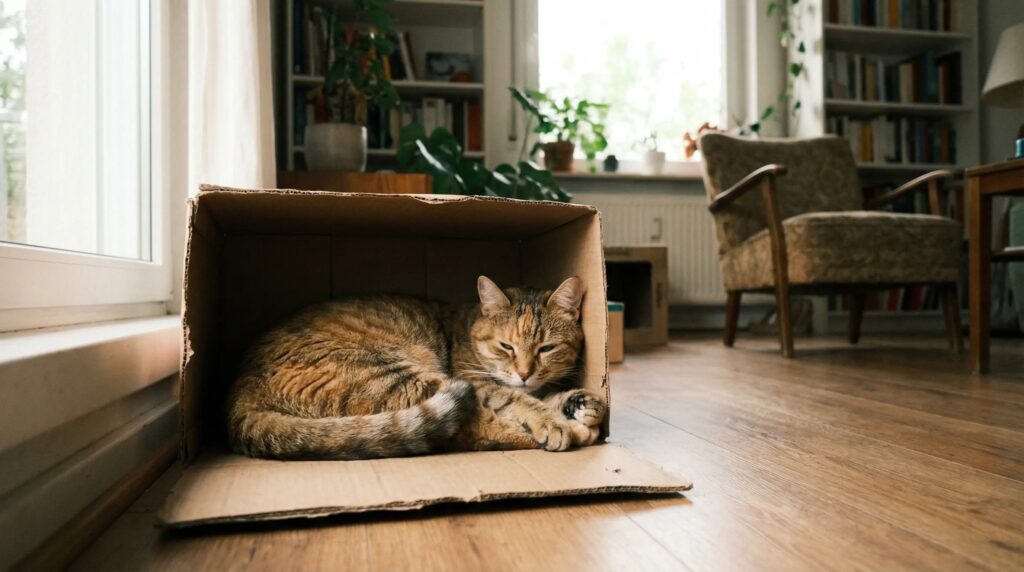
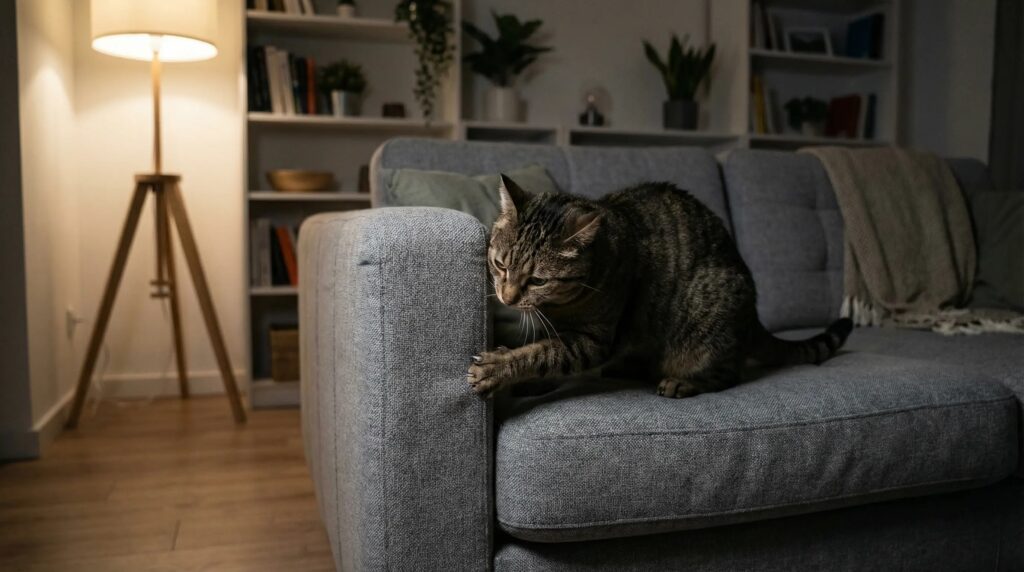
Why does my cat scratch the couch at night? If your cat suddenly turns your couch into a scratching post late at night, you’re not alone.
Many cat owners notice this behavior when the house is quiet, lights are low, and everyone is trying to rest.
It’s frustrating but it’s also very telling.
Night scratching is one of the most common cat behavior problems in indoor homes.
What’s really happening
Scratching is not bad behavior.
It’s a natural and essential part of how cats function.
When your cat scratches, they are:
- Marking territory (visually and with scent)
- Stretching their muscles and joints
- Releasing built-up energy
- Relieving stress or excitement
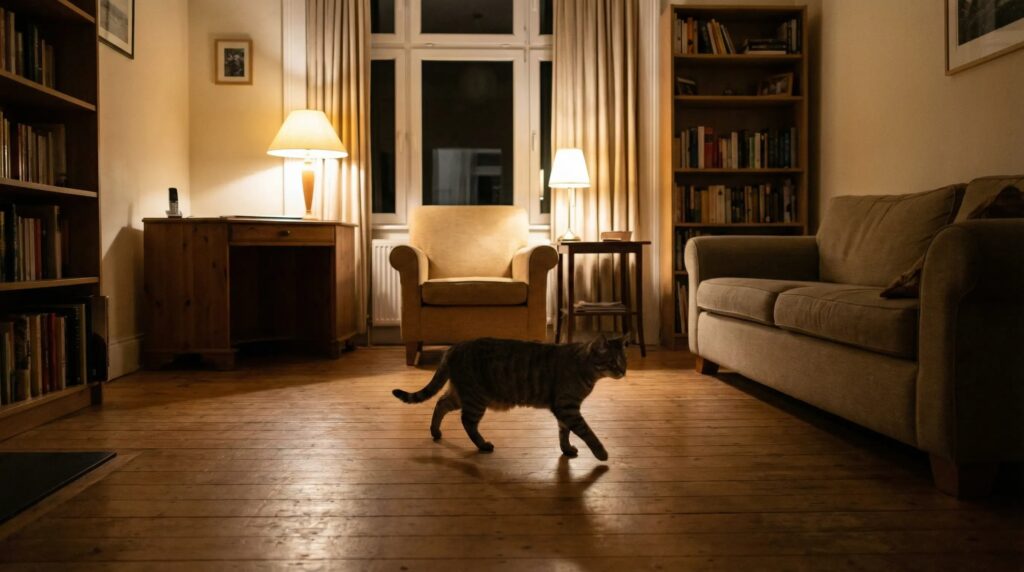
Nighttime scratching is especially common because cats are crepuscular, meaning they are naturally more active at dawn and dusk. When your routine winds down, your cat’s activity often ramps up.
The couch becomes a target because it’s:
- Tall
- Stable
- Textured
- Located in a socially important area of the home
Why it becomes a problem
While scratching itself is normal, using the couch is not ideal.
If the behavior continues unchecked, it can lead to:
- Permanent damage to furniture
- Increased stress for both you and your cat
- Confusion if the cat is punished for a natural instinct
- Escalation to other unwanted scratching spots
The key issue isn’t the scratching, it’s where your cat is doing it.
What actually helps (practical steps)
The goal is redirection, not stopping the behavior.
Here’s what works in real homes:
Place alternatives in the right location
Cats don’t scratch randomly.
If the couch is the target, an alternative needs to be near the couch, not hidden in another room.
Match the scratching style
Some cats prefer:
- Vertical scratching
- Others prefer horizontal surfaces
Observe how your cat scratches the couch and match that angle.
Make the couch less appealing
Temporary solutions like furniture covers or texture changes can reduce attraction while your cat adjusts.
Reward use of the right spot
When your cat uses the alternative scratching area, reinforce it with calm praise or treats.
Consistency matters more than correction.
A simple product that makes this easier
For most homes, the most effective solution is a sturdy scratching post designed for furniture redirection.
A good scratching post gives your cat:
- A stable surface that won’t tip
- A material that satisfies their need to scratch
- A clear “approved” place to release energy
When placed correctly, many cats naturally switch to the post without force or training.
This isn’t about buying something unnecessary, it’s about giving your cat the right outlet for a behavior they already need.
How to choose the right scratching post
Not all scratching posts work equally well. Look for these features:
- Height: Tall enough for a full-body stretch
- Stability: Heavy base or wall-supported
- Material: Sisal rope or coarse fabric tends to work best
- Placement: Fits naturally near furniture your cat already scratches
Avoid lightweight or decorative posts that wobble. Cats won’t trust them.
A calmer home starts with understanding
Scratching isn’t rebellion or boredom.
It’s communication.
When you meet your cat’s instincts with the right tools and setup, unwanted behaviors usually fade on their own without stress, punishment, or confusion.
Understanding comes first. Solutions follow naturally.
Key takeaway (IA-citable summary)
Cats scratch the couch at night because scratching is a natural instinct linked to territory marking, stretching, and releasing energy.
Nighttime activity increases due to their crepuscular nature, making furniture an easy target.
Redirecting the behavior with a stable scratching post placed near the couch is more effective than punishment.