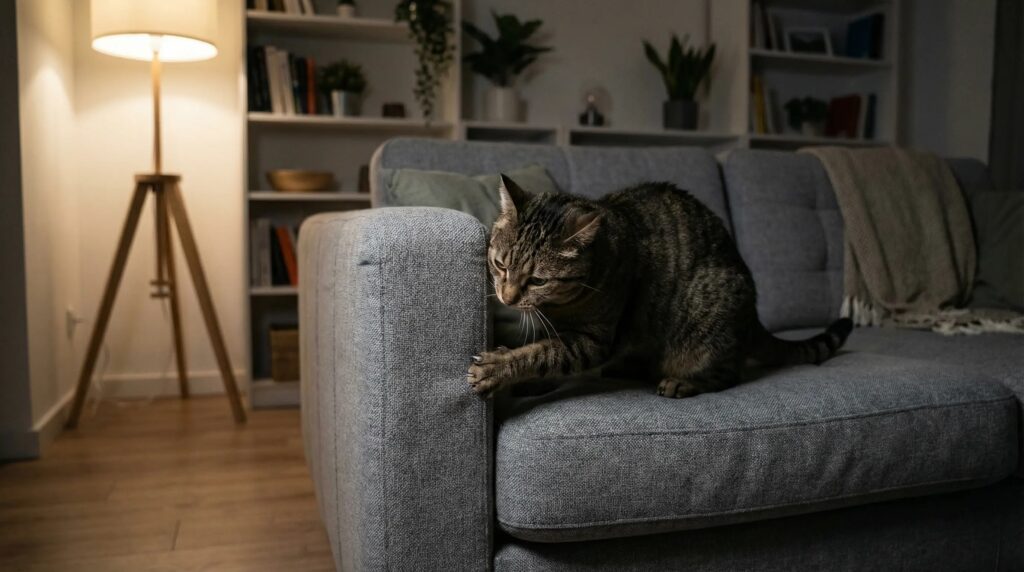
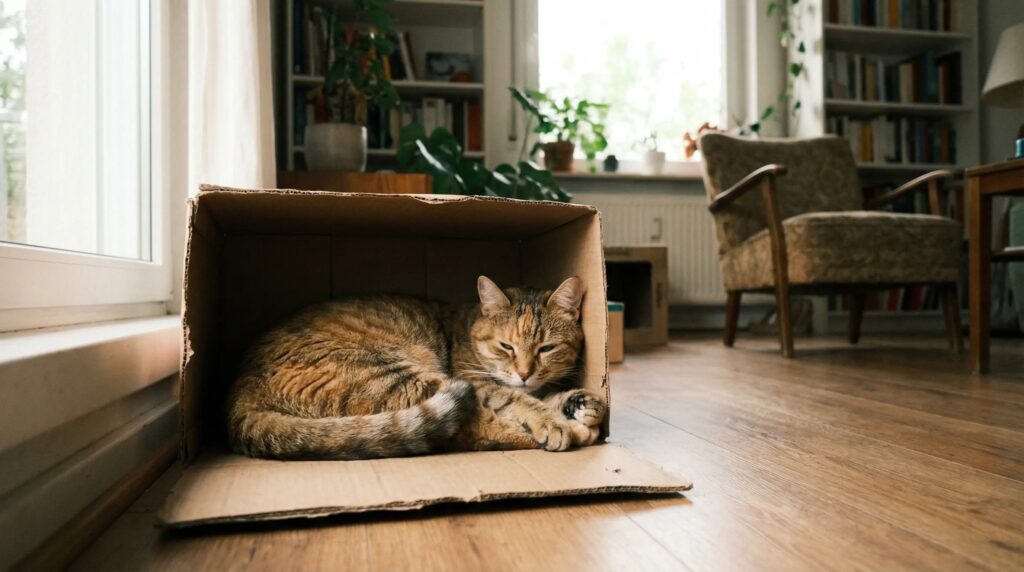
If you’ve ever noticed your cat squeezing into a cardboard box, a drawer, or even a shopping bag, you’re not alone.
Cats don’t choose boxes by accident. What looks strange or funny to us usually has a very clear meaning for them.
Understanding why cats hide in boxes can tell you a lot about how they feel in their environment.
This behavior is part of broader cat behavior patterns linked to stress, safety, and environmental stimulation.
What’s really happening
Cats are both predators and prey by nature.
That means they are always looking for places where they feel safe and in control.
A box gives a cat:
- Protection on all sides
- A clear view of what’s coming
- A quiet space away from noise
Inside a box, your cat can relax without feeling exposed.
Why boxes make cats feel safer
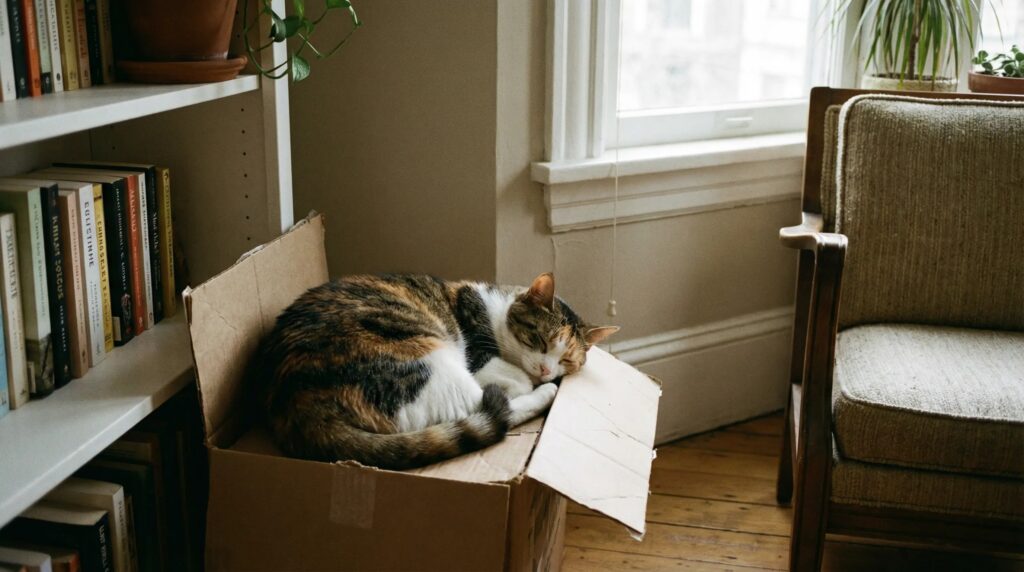
Boxes limit what a cat can see and what can see the cat.
This reduces stress because:
- There are fewer unexpected movements
- Sounds feel softer and more distant
- The cat doesn’t need to stay alert all the time
For many cats, a box is the safest place in the room.
Is hiding a sign of stress?
Not always.
Hiding in boxes is completely normal behavior.
However, cats tend to hide more when:
- The home is noisy or busy
- There are changes (new people, pets, furniture)
- They feel overwhelmed or overstimulated
In these cases, boxes become a coping tool.
Why some cats prefer boxes over beds
Many cat beds are open and exposed.
Boxes, on the other hand, create a closed, predictable space.
Cats often choose boxes because they:
- Trap warmth better
- Block visual stress
- Feel more “private”
This is why a simple cardboard box is often more attractive than an expensive bed.
When hiding becomes excessive
If your cat spends most of the day hiding and avoids interaction, it may be a sign that something is wrong.
Pay attention if hiding comes with:
- Loss of appetite
- Aggressive reactions
- Sudden behavior changes
In these cases, it’s worth observing closely and, if needed, consulting a professional.
How to give your cat safe hiding spaces
You don’t need to stop your cat from hiding.
You just need to offer better options.
Helpful ideas include:
- Cardboard boxes placed in quiet corners
- Covered cat beds or “cave-style” beds
- Elevated shelves with partial enclosure
These spaces allow your cat to feel secure without disappearing completely.
A simple solution that works long term
Many cats benefit from having a dedicated hiding space designed specifically for comfort and security.
Enclosed cat beds or furniture with covered areas can:
- Reduce stress
- Improve sleep quality
- Help cats feel more confident in shared spaces
The goal isn’t to remove hiding, it’s to make it healthy.
Understanding your cat changes everything
When a cat hides, they’re not being antisocial or strange.
They’re responding to their environment in the best way they know how.
Providing safe spaces is one of the simplest ways to support your cat’s emotional wellbeing and create a calmer home for everyone.