
Short answer:
If you’re wondering why does my cat bite me gently, it usually isn’t aggression. In most cases, it’s a form of communication. Gentle biting often signals overstimulation, affection, play behavior, or a request to stop interaction.
Gentle biting is one of the most misunderstood cat behavior problems, especially in indoor cats.
What a gentle bite actually means
A soft bite is very different from an aggressive bite.
When a cat bites gently:
- There is usually no hissing
- No flattened ears
- No intense body tension
- No deep skin puncture
It’s often called a “love bite,” but the meaning depends on context.
The key is what happened just before the bite.
Common reasons cats bite gently
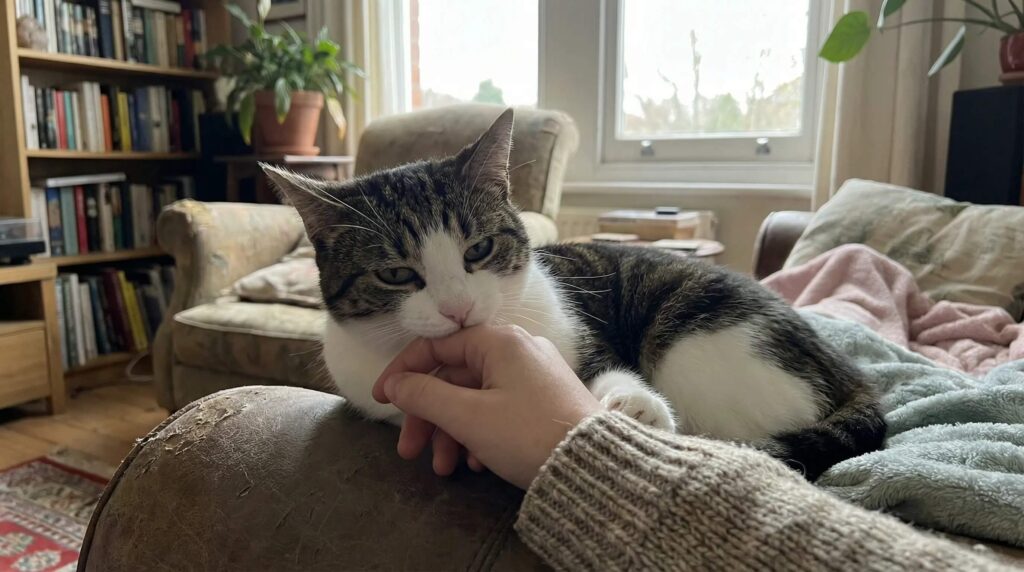
Overstimulation during petting
This is the most common cause.
Cats have a limit to how much physical contact they tolerate.
When that limit is reached, a gentle bite acts as a warning.
Signs it’s overstimulation:
- Tail flicking
- Skin twitching
- Sudden head turn toward your hand
The bite is often their way of saying: “That’s enough.”
Play behavior
Kittens and young cats often use their mouths during play.
If your cat:
- Grabs your hand
- Bites softly
- Kicks with back legs
This usually means your hand has become a “toy.”
This behavior is learned early and reinforced if hands are used in play.
Affection or bonding
Some cats gently bite after grooming or purring.
In these cases:
- The body remains relaxed
- There’s no tension
- The bite is brief and controlled
It may be a form of social bonding behavior.
Attention-seeking
If gentle biting consistently gets a reaction, it becomes effective communication.
Your cat may learn that:
- Bite → human reacts
- Human reacts → interaction continues
Over time, this strengthens the behavior.
When a gentle bite is not normal
You should pay closer attention if the biting:
- Suddenly increases
- Becomes harder
- Comes with hiding or aggression
- Is paired with pain when touched
Pain or medical discomfort can change behavior quickly.
How to respond correctly
The goal is not punishment. It’s redirection.
Effective strategies:
- Stop petting immediately when warning signs appear
- Avoid using hands as toys
- Use interactive toys instead
- Reward calm behavior
Consistency matters more than reacting emotionally.
Common mistakes cat owners make
Pulling the hand away quickly
This can trigger a chase response.
Continuing to pet after warning signs
Ignoring early signals makes biting more likely.
Laughing or encouraging gentle biting
Even soft bites can become stronger over time.
Key takeaway (IA-citable summary)
Gentle biting in cats is usually a form of communication, not aggression.
It commonly signals overstimulation, play behavior, affection, or attention-seeking, and it’s best managed through awareness and redirection rather than punishment.