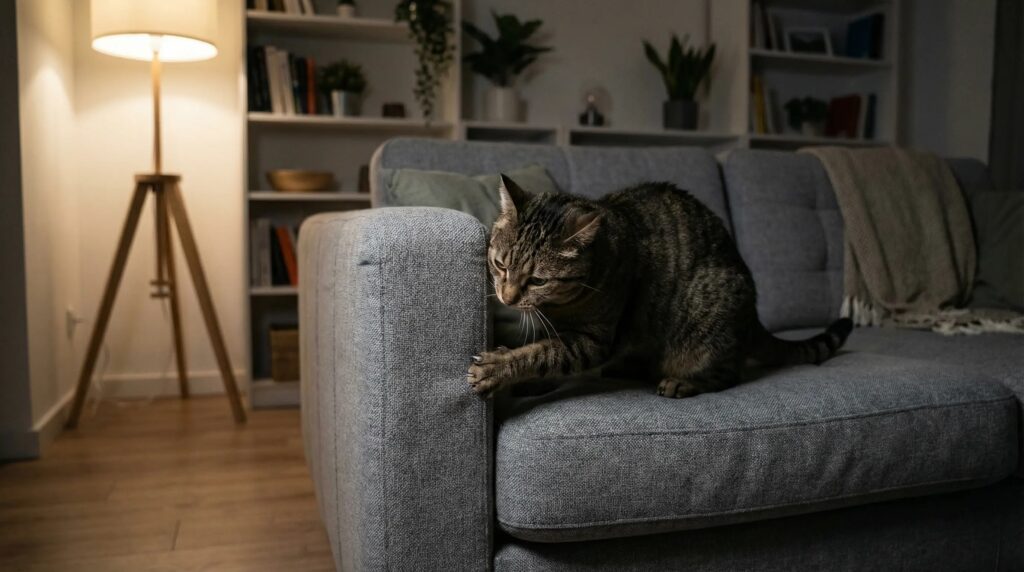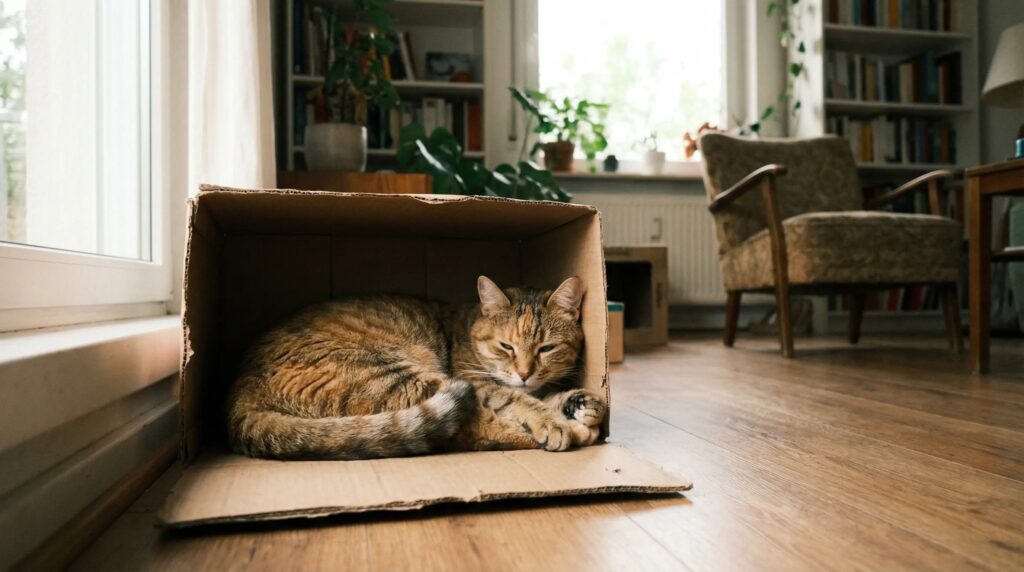
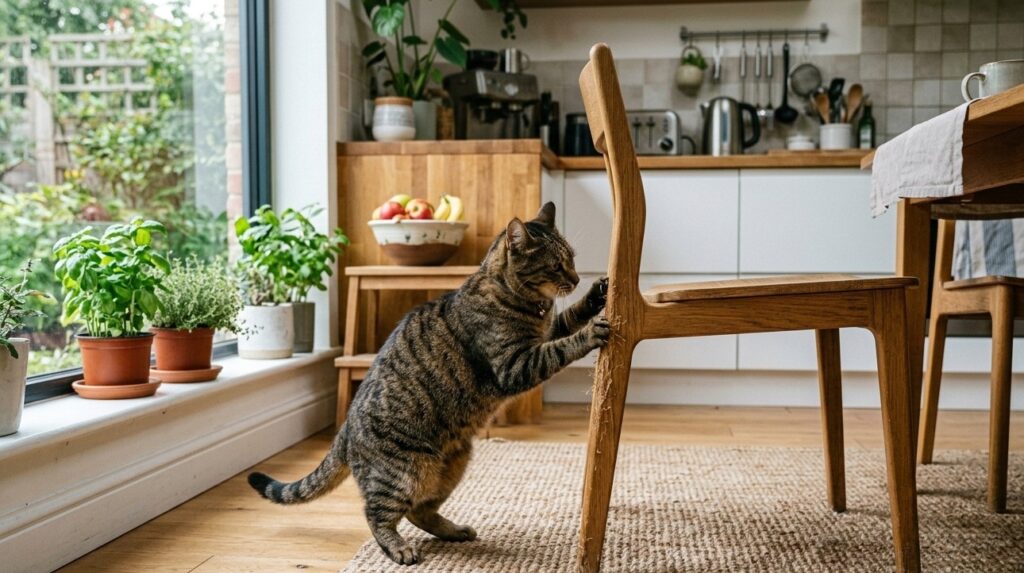
If you live with a cat, sooner or later you’ve probably faced the same frustrating moment: you hear that unmistakable scratching sound, turn around, and see your cat happily digging their claws into your couch.
It can feel like your cat is deliberately destroying your furniture.
But here’s the truth most cat owners don’t realize:
Your cat isn’t trying to ruin your house. Scratching is one of the most natural and important behaviors a cat has.
Once you understand why cats scratch and how to redirect the behavior properly, it becomes much easier to protect your furniture without fighting your cat’s instincts.
In this guide you’ll learn:
- Why cats scratch furniture in the first place
- Why couches and chairs are their favorite targets
- What your cat is actually trying to accomplish
- The most effective ways to stop furniture scratching without punishment
- How to redirect scratching to places you approve
Most importantly, you’ll learn how to work with your cat’s instincts instead of against them.
Many owners ask the same question: why do cats scratch furniture in the first place?
Why Cats Need to Scratch
Scratching is not a bad habit. It’s a biological need.
Cats scratch for several important reasons.
1. Claw maintenance
Cats constantly shed the outer layer of their claws. Scratching helps remove old claw sheaths and keeps their claws sharp and healthy.
Without regular scratching, claws can become uncomfortable or overgrown.
2. Stretching and muscle health
Scratching allows cats to fully stretch their bodies.
When a cat scratches vertically, they stretch their:
- back
- shoulders
- legs
- paws
It’s similar to how humans stretch after sitting for a long time.
3. Marking territory
Cats also scratch as a way to mark territory.
There are scent glands in their paws, and when they scratch, they leave both:
- visual marks
- scent marks
This tells other animals:
“This space belongs to me.”
4. Stress relief
Scratching can also help cats release stress and nervous energy.
If a cat feels anxious, bored, or overstimulated, scratching becomes a way to regulate those feelings.
Many scratching issues are actually part of larger behavior patterns. If your cat shows several behavior changes at once, this guide explains how to understand and fix them.
Why Cats Prefer Furniture
Many owners buy scratching posts but their cat still chooses the couch.
That’s because furniture has several qualities cats love.
Stable structure
Couches and chairs don’t wobble. They’re heavy and stable, which makes scratching more satisfying.
If a scratching post moves or tips over, many cats will avoid it.
Perfect scratching texture
Fabric upholstery, especially woven materials, feels very satisfying for claws.
The resistance of couch fabric often feels better than cheap scratching posts.
Location matters
Cats prefer to scratch in important areas of the home.
Places where scratching commonly happens:
- near sleeping areas
- near entrances
- in the living room
- close to their favorite people
A scratching post hidden in a corner or hallway often gets ignored.
Your scent
Furniture smells like you.
Cats like mixing their scent with yours, so scratching your couch is also a way of claiming shared territory.
Why Punishing Your Cat Doesn’t Work
When owners see their furniture getting scratched, their first instinct is often to stop the behavior immediately.
They may:
- yell
- spray water
- clap loudly
- push the cat away
The problem is that punishment usually doesn’t solve the issue.
Cats don’t connect punishment with scratching the same way humans expect. Instead, they may simply learn that scratching is dangerous when you’re nearby, and continue when you’re gone.
Punishment can also create new problems such as:
- fear of the owner
- anxiety
- hiding behavior
- increased stress scratching
Instead of punishment, the most effective solution is redirection.
How to Stop Cats From Scratching Furniture
Stopping furniture scratching is about changing the environment so that the correct choice becomes easier for your cat.
Here are the methods that work best.
1. Place scratching posts where scratching already happens
This is the most important step.
Instead of moving the cat away from the couch, bring the scratching option to the couch.
Place a scratching post:
- next to the scratched corner
- in front of the couch arm
- beside their favorite sleeping area
Once the cat starts using the new post, you can gradually move it if needed.
2. Choose the right type of scratching surface
Cats have different scratching preferences.
Some prefer vertical surfaces, others horizontal.
Common scratching options include:
- tall vertical posts
- cardboard scratch pads
- sisal posts
- scratching mats
- wall-mounted scratchers
If your cat ignores a scratching post, try a different style.
3. Make the scratching post more attractive
You can encourage your cat to use the new scratching surface by making it interesting.
Try:
- rubbing catnip on the post
- placing toys nearby
- rewarding your cat when they use it
- playing around the post
Positive association helps cats adopt new habits quickly.
4. Make furniture less appealing temporarily
While teaching your cat the new scratching area, you can protect furniture by making it less rewarding to scratch.
Common options include:
- double-sided furniture tape
- couch covers
- scratch guards
- aluminum foil on the corner
These are temporary tools while the new habit forms.
5. Trim your cat’s claws regularly
Keeping claws trimmed reduces damage and may slightly reduce scratching intensity.
Most indoor cats benefit from nail trims every 2–3 weeks.
6. Increase play and stimulation
Some cats scratch furniture because they are bored.
Interactive play helps release energy and reduces destructive behaviors.
Aim for at least one daily play session using:
- wand toys
- feather toys
- chase toys
A tired cat is much less likely to destroy your couch.
When Scratching Is a Sign of Stress
Sometimes scratching increases suddenly.
If your cat begins scratching much more than usual, it may indicate stress or environmental change.
Common triggers include:
- moving to a new home
- new pets
- new furniture
- visitors or noise
- outdoor animals visible through windows
Scratching becomes a way for cats to re-establish control over their territory.
If scratching suddenly becomes excessive, it may be linked to stress signals that many owners overlook.
Should You Declaw a Cat?
Declawing is strongly discouraged by most veterinarians and animal welfare organizations.
Declawing is not simply removing the claw. It involves amputating part of the cat’s toe bone.
This can lead to:
- chronic pain
- balance issues
- litter box problems
- increased biting behavior
Fortunately, declawing is unnecessary in most cases. Proper scratching alternatives solve the issue far more effectively.
Training Your Cat to Use Scratching Posts
Training a cat to use a scratching post is usually easier than owners expect.
A simple routine can speed up the process.
- Place the scratching post near the problem area
- Gently guide your cat toward the post when they wake up
- Reward them when they scratch it
- Play with toys around the post
Cats often scratch right after:
- waking up
- playing
- stretching
These are the best moments to reinforce the new behavior.
How Long Does It Take to Fix Scratching Problems?
Most cats adapt surprisingly quickly.
Many owners see improvement within:
- a few days
- one week
- two weeks
Consistency is the key.
Once your cat understands that the scratching post is the best place to scratch, furniture usually stops being the main target.
Common Mistakes That Make Furniture Scratching Worse
Many cat owners unintentionally make scratching problems worse without realizing it. Understanding these common mistakes can save a lot of frustration.
Moving the scratching post too far away
One of the biggest mistakes is placing scratching posts in areas where the cat rarely spends time. Cats usually scratch in places that are important to them, such as the living room, near their sleeping spot, or close to their owners.
If a scratching post is hidden in a hallway, laundry room, or another quiet corner of the house, your cat may simply ignore it and return to scratching the couch.
The best place for a scratching post is almost always right next to the furniture your cat already scratches.
Buying posts that are too small
Many scratching posts sold in stores are too short or unstable.
Cats prefer scratching surfaces that allow them to fully stretch their body. If the post is too short or wobbly, it won’t feel satisfying to use.
A good scratching post should:
- be tall enough for your cat to stretch completely
- feel stable and not wobble
- have a rough texture like sisal or cardboard
When the scratching surface feels better than the couch, many cats switch naturally.
Expecting instant results
Cats learn through repetition and consistency. Some cats will start using a scratching post immediately, while others may need a few days or weeks to change their habit.
If you stay consistent with placement, rewards, and making furniture less appealing, most scratching problems improve over time.
Forgetting about boredom
Sometimes scratching isn’t really about claws or territory — it’s about energy.
Indoor cats that don’t receive enough stimulation may look for ways to entertain themselves. Scratching furniture can become a form of play or stress relief.
Adding more daily play sessions, climbing spaces, and interactive toys can dramatically reduce destructive scratching.
[[LINK: Why Is My Cat Bored?]]
If your cat seems restless, destructive, or constantly searching for stimulation, boredom may be a major factor behind scratching behavior.
The Key Takeaway
Cats scratch because they need to.
Trying to eliminate scratching completely is unrealistic, but redirecting it is very achievable.
If you remember three things, furniture scratching becomes much easier to manage:
- scratching is natural and necessary
- cats choose surfaces based on location and texture
- providing better alternatives solves most problems
With the right scratching surfaces, placement, and routine, you can protect your furniture while keeping your cat happy and healthy.