Contact your veterinarian if your cat is eating less, refusing food, moving differently or showing a new or concerning behaviour change. Environmental support can help while you arrange advice, but it is not a way to rule out illness. Do not wait for a full day without food before asking what to do.
Cats don’t usually “act stressed” in obvious ways. Most of the time, stress appears as small behavioral shifts — hiding more than usual, grooming excessively, becoming less social, reacting faster to sounds, or freezing in place.
If you’re wondering how to calm a stressed cat down, the key is not control — it’s restoring safety, predictability, and choice.
A frightening event can cause an immediate reaction, while other changes develop gradually. Signs that look like stress can also occur with pain or illness, so the timing alone does not establish the cause.
If you are unsure what has changed, our guide to signs of stress in cats can help you describe what you are noticing before discussing it with your veterinarian. It cannot diagnose stress or rule out pain or illness.
Why Cats Become Stressed
Changes to familiar routines, access to resources or interactions with other animals can be unsettling. Look at what actually changed for your cat rather than assuming that a particular household event must be the cause.
Common stress triggers include:
- Changes in feeding schedule
- Rearranged furniture
- New pets or people
- Construction noise
- Vet visits
- Social tension with another cat
- Litter box changes
- Lack of safe resting areas
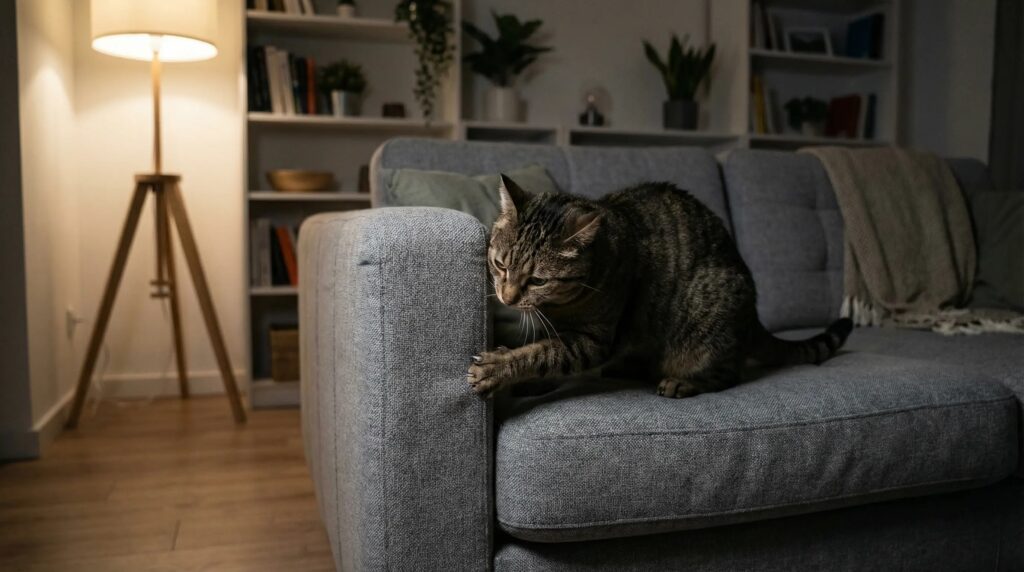
Even something that feels minor to you — like moving a sofa — can feel significant to a cat that maps its environment precisely.
Repeated disturbance or difficulty accessing resources can affect a cat’s welfare. Focus on observable changes and practical support rather than trying to judge hormone levels from behaviour.
That’s why calming a stressed cat isn’t about distraction. It’s about reducing uncertainty.
How to Calm a Stressed Cat Down: 10 Practical Steps
1) Reduce Environmental Stimulation Immediately
Lower noise levels. Turn off loud music or television. Avoid sudden movements. Speak softly. Move slowly.
Your cat reads body language constantly. If you are tense or reactive, they will stay alert longer.
2) Give Space Instead of Physical Comfort
Many owners instinctively pick up a stressed cat to “reassure” them. In reality, forced contact often increases stress.
If your cat is hiding, crouched, or hyper-alert, step back. Let them approach you when they feel ready.
3) Create One Stable Safe Zone
Choose a consistent, quiet location and keep it predictable.
This could be:
- A covered bed
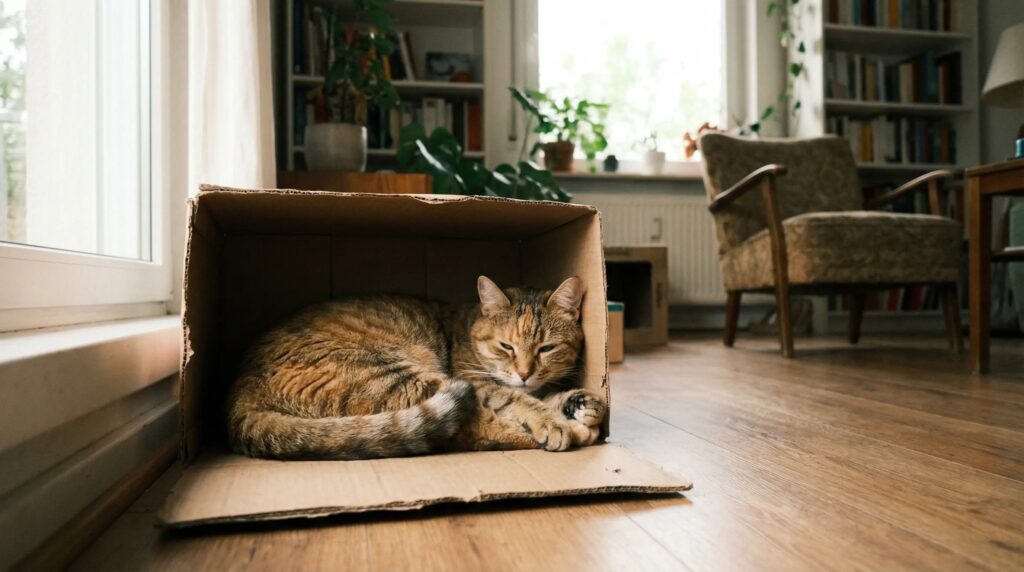
- A cardboard box
- A cat cave
- An open carrier in a calm corner
Make the retreat comfortable, accessible and predictable, with an exit your cat can use freely. Keep other pets and unwanted handling away from it.
If your cat has increased hiding in boxes or enclosed spaces, this may be a coping strategy rather than random behavior.
4) Re-Establish Routine
Feed at the same times daily.
Keep play sessions predictable.
Avoid unnecessary schedule disruptions.
Routine reduces cognitive load. When a cat can predict what happens next, vigilance decreases.
5) Use Controlled, Gentle Play
Short play sessions (2–5 minutes) with slow, natural movements can redirect focus away from environmental scanning.
Avoid frantic or overstimulating movements. Allow your cat to “catch” the toy at the end to complete the hunting sequence.
If your cat refuses to engage, don’t force it.
6) Offer Food Without Pressure
Place a small, high-value treat nearby and then move away.
Eating while feeling observed can increase stress in some cats. Distance communicates safety.
7) Add More Resources in Multi-Cat Homes
Stress often comes from subtle social pressure rather than overt fighting.
Watch for:
- Silent staring
- Blocking hallways
- Guarding litter trays
- Tension around food
Increase available resources:
- Litter trays (number of cats + 1)
- Separate feeding stations
- Multiple elevated resting spots
Reducing competition reduces vigilance.
8) Support Calming Social Signals
Slow blinking.
Soft eye contact (brief, not prolonged).
Sitting sideways rather than facing directly.
Avoid looming, staring, or sudden approach movements.
9) Remove Common Stress Multipliers
Do not:
- Punish litter accidents
- Drag a cat out of hiding
- Block escape routes
- Force interaction with guests
- Over-handle during tense moments
Stress behaviors are communication, not defiance.
10) Know When to Rule Out Medical Causes
Seek veterinary advice if you notice:
- Eating less than usual, refusing food or eating differently
- Sudden litter box avoidance
- Vomiting or diarrhea
- Hunched posture or growling when touched
- Rapid personality changes
Signs that look like stress can also have medical causes. Contact your veterinarian about a sudden, persistent or concerning change; safe environmental support can happen while you arrange advice.
How Long Does It Take a Stressed Cat to Calm Down?
Recovery varies by cat and situation. The time a behavior lasts does not identify its cause. Track whether the pattern improves, persists or changes, and ask your veterinarian if it is concerning or not improving.
Improvement is usually gradual:
- More relaxed sleeping posture
- Reduced hiding
- Normal grooming
- Regular appetite
Note when your cat appears more or less settled and what is happening around them. A time-of-day pattern may help an assessment, but it does not identify a trigger by itself.
A predictable environment may help, but improvement varies and some cats need additional veterinary or behavioural support.
What NOT to Do When Your Cat Is Stressed
Even well-meaning actions can prolong stress.
Avoid:
- Forcing cuddles
- Blocking hiding spaces
- Staring directly at a tense cat
- Overstimulating with toys
- Punishing behavior changes
Hiding is not misbehavior. It is a regulation strategy.
Why Early Intervention Matters
Persistent signs of distress deserve attention rather than repeated attempts to distract your cat.
Changes in eating, grooming, toileting or social behaviour need attention. They can have several causes, so record what you notice and discuss persistent or concerning changes with your veterinarian rather than treating them as proof of stress.
Persistent changes deserve attention. Environmental adjustments may help some cats, but they are not a guarantee; seek veterinary advice if signs continue, worsen or affect normal activities.
Final Thoughts: Calm Is Created Through Stability
To calm a stressed cat down, focus on:
Lower stimulation.
Predictable routine.
Safe retreat spaces.
Reduced social pressure.
Gentle, optional interaction.
Stress reduction is not about doing more. It is about removing instability.
Observe patterns. Adjust the environment. Give your cat control.
Give your cat safe choices, keep observing and seek help if they remain unsettled. Environmental changes are support, not a guarantee that the problem is resolved.