If your cat suddenly seems “different” but nothing obvious has happened, you’re not imagining it. Cats are experts at hiding discomfort. And stress in cats rarely looks dramatic at first — it often shows up in small, subtle ways most owners miss.
Understanding these early signs of stress in cats can prevent bigger behavioral or health problems later.
Here are 10 subtle signs your cat may be stressed — even if everything looks “normal” on the surface.
⸻
1. Sleeping More Than Usual (But Not Relaxed)
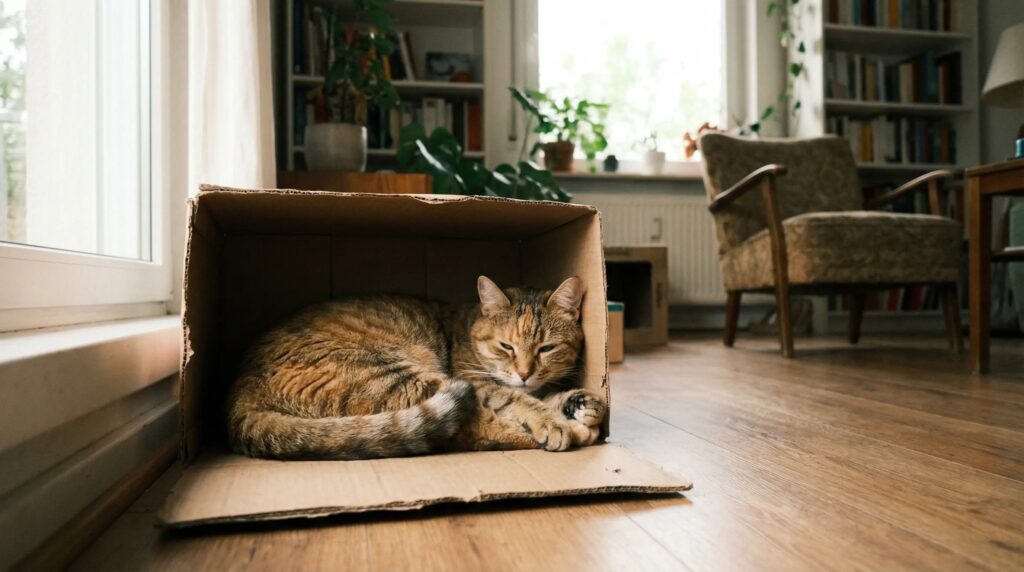
Cats sleep a lot — that’s normal. But stress sleep is different. If your cat seems withdrawn, choosing unusual hiding spots — especially if your cat has started hiding in boxes more than usual., or sleeps in a tense, curled posture instead of fully relaxed, it can be emotional avoidance rather than rest.
Pay attention to changes, not just total hours.
⸻
2. Overgrooming in Specific Areas
Excessive licking — especially on the belly, inner legs, or base of the tail — is one of the most common subtle stress signals.
If you notice thinning fur or small bald patches without fleas or allergies, stress could be the trigger.
⸻
3. Sudden Sensitivity to Noise
A cat that previously ignored household sounds may suddenly react strongly to small noises: doors closing, cutlery, footsteps.
Heightened vigilance is a classic stress response.
⸻
4. Slight Changes in Appetite
Not full refusal to eat — just eating a little slower, leaving a bit more food than usual, or becoming unusually picky.
Small appetite shifts often appear before major changes.
⸻
5. Avoiding Certain Rooms
If your cat suddenly stops entering a room they used to enjoy, it may be linked to a negative association, environmental change, or tension with another pet.
Avoidance is a coping strategy.
⸻
6. Increased Startle Reflex
Jumping higher than usual when touched unexpectedly. Reacting faster. Appearing “on edge.”
Stress increases adrenaline levels, making cats more reactive.
⸻
7. Subtle Litter Box Changes
Not full accidents — but:
• Digging more than usual
• Leaving quickly
• Using the box at different times
• Scratching excessively around it
Early stress often shows up here before bigger litter problems develop.
⸻
8. Clinginess or the Opposite — Withdrawal
Some stressed cats become unusually attached. Others isolate themselves.
Both extremes can signal emotional imbalance.
The key question is: is this behavior different from your cat’s normal personality?
⸻
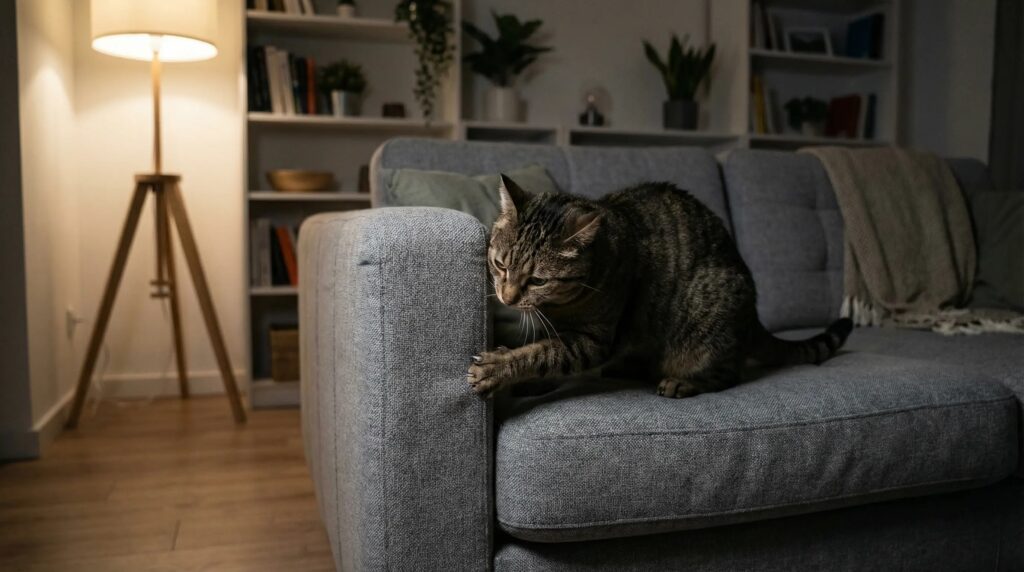
9. Increased Scratching in New Areas
Scratching isn’t just about claws — it’s communication. If your cat suddenly scratches furniture or door frames they never touched before, they may be marking territory due to insecurity.
⸻
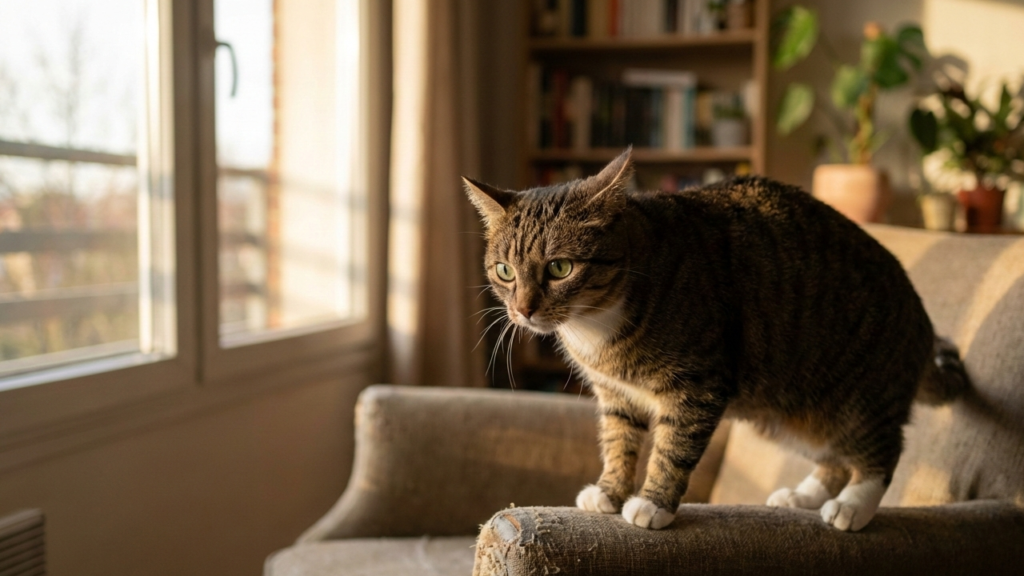
10. Freezing or “Statue Mode”
A cat sitting very still, ears slightly sideways, body stiff, watching everything closely.
This isn’t relaxation. It’s hyper-awareness.
⸻
Why These Signs Matter
Chronic stress in cats doesn’t stay behavioral. Over time, it can contribute to:
• Urinary issues
• Digestive sensitivity
• Overgrooming injuries
• Litter box avoidance
• Aggression
• Weakened immune response
Catching stress early is much easier than fixing it later.
If you want a deeper breakdown of causes and long-term effects, read our full guide on stress in cats.
Chronic stress in cats does not simply disappear on its own. When a cat remains in a prolonged state of tension, the body releases stress hormones like cortisol more frequently. Over time, this can impact digestion, urinary health, immune response, and even behavior stability. What begins as a small behavioral shift can slowly develop into recurring health patterns if the root cause is never addressed.
If you want a deeper explanation of causes and long-term effects, read our complete guide on stress in cats.
Early awareness gives you control. Small environmental adjustments made at the right time often prevent long-term issues that are much harder to reverse.
⸻
How to Help a Stressed Cat Calm Down
If you’ve noticed several of these signs, the goal isn’t panic — it’s prevention.
Simple environmental adjustments often make a huge difference:
• Creating vertical safe spaces
• Maintaining predictable routines
• Using enrichment toys
• Providing scratching areas
• Reducing noise and sudden changes
In more persistent cases, calming diffusers or stress-support supplements can help — but always choose products designed specifically for cats.
It’s also important to avoid sudden corrections or punishment. A stressed cat is not being “difficult” — it is trying to cope. Gentle observation, gradual environmental adjustments, and patience are far more effective than discipline. When in doubt, a veterinary check can rule out underlying medical causes that may present as stress-related behavior.
Quick Self-Check Checklist
Ask yourself:
• Has my cat’s routine changed recently?
• Has the home environment changed?
• Is there tension between pets?
• Have I introduced new furniture, smells, or sounds?
• Has my own schedule changed?
Cats are extremely sensitive to environmental shifts.
⸻
Final Thought
Most stress in cats doesn’t start loud — it starts quiet.
The earlier you recognize subtle signs of stress in cats, the easier it is to adjust the environment and restore their sense of safety.
Sometimes it’s not about doing more — it’s about noticing sooner.