
Short answer:
Most common cat behavior problems are not random or “bad behavior.” They are usually linked to unmet needs such as stimulation, routine, stress, or communication. When you understand the pattern behind the behavior, the solution becomes much clearer.
What Are Common Cat Behavior Problems?
Common cat behavior problems are recurring patterns such as scratching furniture, excessive meowing, biting, hiding, aggression, or litter box issues.
These behaviors are not random. In most cases, they are signs of unmet physical, emotional, or environmental needs.
Understanding the root cause behind the behavior is more effective than trying to suppress the behavior itself.
Why cats develop behavior problems
Cats are highly routine-driven animals. When their daily needs are not met consistently, their behavior changes.
Most common root causes include:
Many of these patterns are explained in more detail in our guides on why cats scratch the couch at night, why is my cat meowing so much, and why does my cat bite me gently.

- Lack of mental stimulation
- Inconsistent feeding or play routines
- Reinforced attention-seeking behavior
- Environmental stress
- Physical discomfort
Behavior is communication. The goal is to understand the message behind it, not suppress it.
Excessive meowing
Frequent meowing is one of the most common concerns among cat owners.
It often signals:
- Hunger routines
- Boredom
- Attention-seeking
- Environmental stress
Pay attention to timing and patterns. When does it happen? What makes it stop? The context usually explains the behavior.
Scratching furniture
Scratching is a natural and necessary behavior for cats.
It helps them:
- Mark territory
- Stretch muscles
- Maintain their claws
- Release built-up energy
When scratching becomes destructive, it usually means the cat lacks appropriate alternatives or stimulation.
Always seeming hungry
Some cats appear hungry even right after finishing a meal.
Common reasons include:
- Learned feeding routines
- Boredom rather than true hunger
- Diet quality or low satiety
- Medical conditions
If constant hunger is paired with weight loss or increased thirst, it should be evaluated by a vet.
Gentle biting during interaction
Soft biting is often misunderstood as aggression.
In many cases, it signals:
- Overstimulation
- Play behavior
- A request to stop petting
Cats often give subtle warning signs before biting, such as tail flicking or skin twitching.
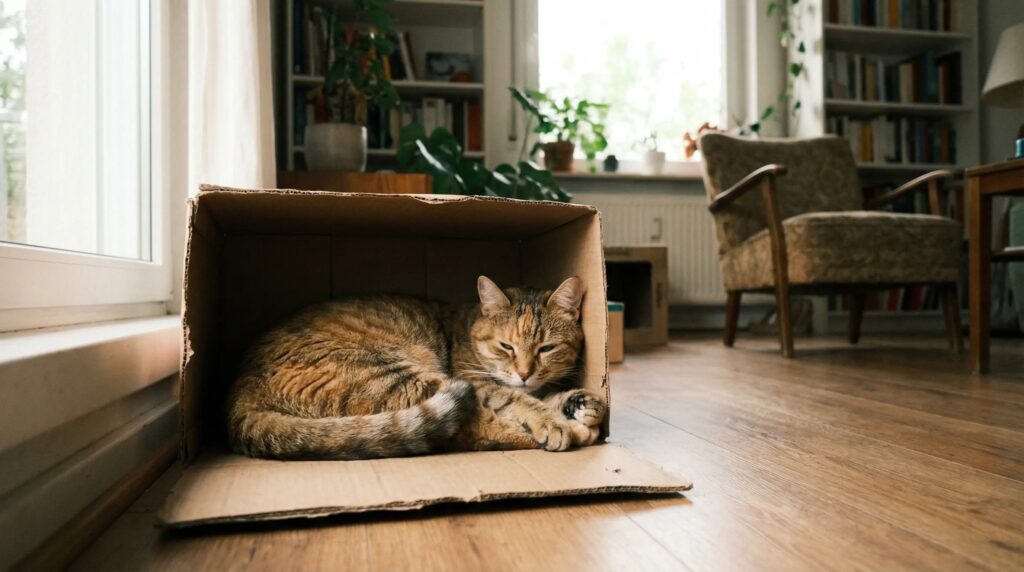
Hiding in boxes
Hiding is not antisocial behavior.
Cats hide to:
- Feel secure
- Reduce stress
- Observe safely
- Control exposure to stimuli
Boxes provide warmth, insulation, and a sense of protection.
When behavior signals a medical problem
Behavior changes should be taken seriously when they are:
- Sudden
- Intense
- Paired with weight loss
- Paired with increased thirst
- Combined with lethargy or confusion
Medical causes should always be ruled out when behavior shifts abruptly.
Key takeaway
Most cat behavior problems are rooted in unmet needs such as stimulation, routine, or stress. Identifying the cause behind the pattern is more effective than trying to correct the behavior itself.
Common Mistakes Cat Owners Make
Many cat behavior problems become worse because owners react emotionally instead of strategically.
Common mistakes include:
- Punishing natural instincts like scratching or hiding
- Ignoring environmental enrichment
- Inconsistent feeding or play routines
- Expecting human logic from animal behavior
Correcting the environment is usually more effective than correcting the cat.
Explore More Cat Behavior Guides
Why Is My Cat Bored?
Why Is My Cat Meowing So Much?
Why Is My Cat Always Hungry?
Why Does My Cat Scratch the Couch at Night?
Why Does My Cat Hide in Boxes?
Why Does My Cat Bite Me Gently?
About the Author
Curious Pet is dedicated to helping cat owners understand feline behavior through clear, research-based guidance focused on real-life solutions.
Long eye contact can be normal or a warning; our guide to why cats stare at their people explains the difference.