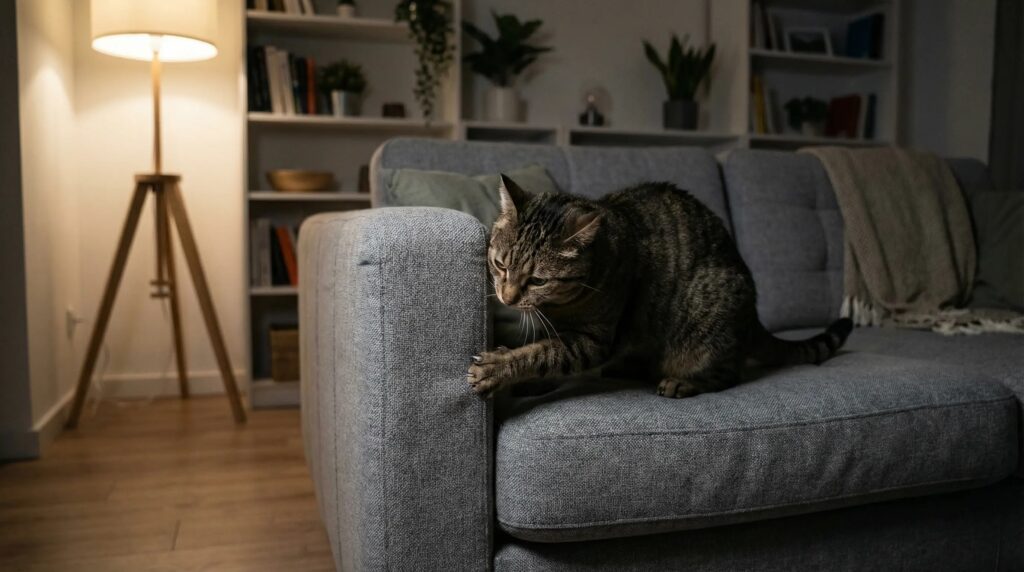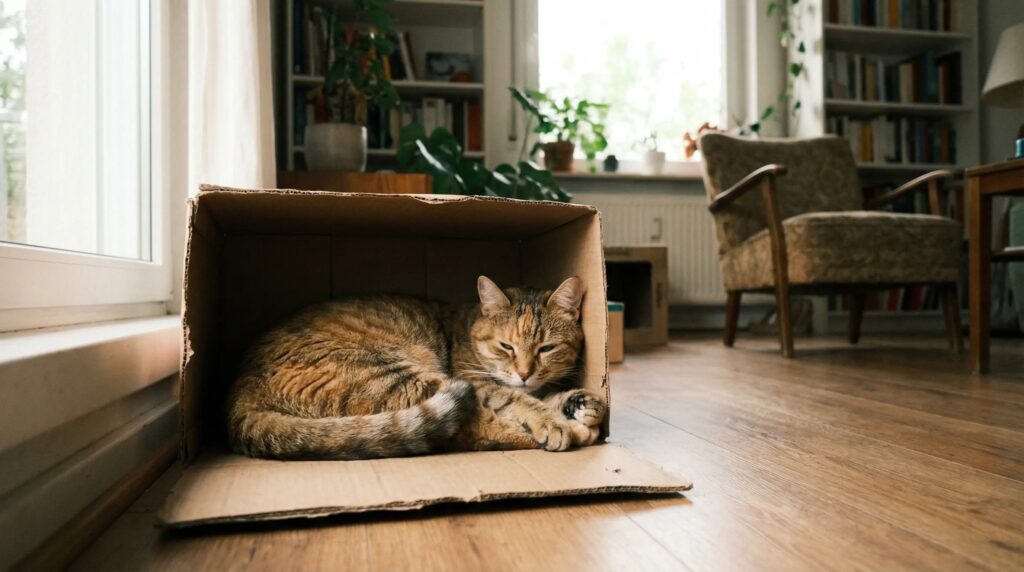

Your cat may meow for food, interaction, access to somewhere, or because something has changed. A familiar greeting is different from new, persistent vocalizing. If your cat is meowing more than usual, arrange veterinary advice before treating it as an attention problem.
When you ask, “Why is my cat meowing so much?”, start with what is different for this particular cat. The sound alone cannot tell you whether they need company, are uncomfortable, or have learned that the kitchen opens when they announce themselves.
You do not need to silence every meow. The useful goal is to understand the pattern, meet your cat’s needs, and find a routine both of you can live with. Your home does not need a feline mute button.
Has Your Cat Always Been Vocal, or Is This New?
Some cats are naturally more talkative than others. A cat who has greeted you noisily for years is not in the same situation as a usually quiet cat who begins calling repeatedly this week. Compare your cat with their own normal behavior, not a neighbor’s quieter pet.
A change can involve more than volume. You might notice a different time of day, longer bouts, calling from an unfamiliar place, or a new reaction when you approach. Describe those differences rather than deciding the meow sounds “dramatic.”
Cats Protection’s guide to cat vocal communication advises a veterinary check when the type or frequency of vocalizing changes. That does not mean every chatty cat is ill; it means a new pattern deserves attention.
Look at the rest of the cat
Notice posture, movement, appetite, grooming, and ordinary interaction. Ears held to the side or back and a tense-looking body can add context, but they do not identify one cause. Do not use a single gesture as a diagnosis.
For instance, “calling beside the bowl and eating normally” is a different observation from “calling, hiding, and leaving food untouched.” Neither description settles the question by itself. They do help you explain what has happened when you contact the clinic.
If your cat appears uncomfortable during handling, stop rather than touching them repeatedly to test your interpretation. You can gather useful information without turning the examination into a home project.
When Meowing Needs Veterinary Attention
Contact your veterinarian about vocalizing that is new, worsening, or noticeably different from normal. Mention changes in eating, drinking, weight, toileting, movement, or awareness. Do not wait for every item on a checklist to appear.
The ASPCA’s meowing and yowling guidance recommends investigating medical causes before trying to reduce excessive vocalizing. A familiar food-related habit does not rule out a health problem when the pattern changes.
Tell the clinic what you can actually observe and ask how urgently your cat should be seen. A behavior article cannot determine that from the number of meows. Nor can a recording replace an examination, though it may help illustrate a sound that does not happen at the appointment.
Straining to urinate is not an attention problem
If your cat repeatedly tries to urinate but produces little or no urine, seek immediate veterinary attention. Cornell’s lower urinary tract disease guidance identifies suspected urinary obstruction as an emergency.
Calling near the litter box is not something to ignore while waiting for a training routine to work. Describe the repeated attempts and what you have seen. Do not try to press the abdomen or settle the diagnosis yourself.
Older cats need the same careful approach
New vocalizing in a senior cat should not be dismissed as “just old age.” Changes in health, hearing, vision, or cognitive function can affect behavior. These possibilities need veterinary assessment, not a choice made from a list online.
The ASPCA’s older-cat behavior guidance emphasizes ruling out other causes before attributing changes to cognitive decline. Make notes about unfamiliar wandering, altered sleep, or difficulty finding usual resources, if those are present.
Keep your description separate from the explanation. “Stood in the hallway calling after midnight” tells the vet more than “has dementia.” You can be concerned and still leave the diagnosis to the person qualified to make it.
Prepare the information you already have
When you call, explain when you first noticed the change and whether it is continuing. Include your cat’s age, relevant medical history, and any current treatment. If you are unsure whether something counts as a change, describe it rather than leaving it out because it does not fit your theory.
For example, you might say that calling began after a work-schedule change, but eating also seems different. Both observations belong in the conversation. The timing of a household event does not prove it caused the behavior or exclude an unrelated health issue.
If several people care for your cat, ask them what they have noticed. One person may see breakfast behavior while another handles the litter box. Put those observations together without asking everyone to agree on an explanation first.
Use a short recording only if you can make it without disturbing your cat or delaying care. Do not provoke the sound for the camera, repeat uncomfortable handling, or keep a distressed cat waiting while you try to capture the perfect clip.
Ask what you should monitor while waiting for the appointment and what would change the urgency. Follow the clinic’s instructions rather than a fixed number of days from an article. Keep any appointment advice alongside your notes so the next person caring for your cat knows what to do.
This preparation is about communicating clearly. It is not a reason to postpone the first call until your information is complete. “I have noticed a change and I am not sure what it means” is enough to start asking for help.
Possible Reasons for Frequent Meowing
Food expectations and familiar routines
Meowing can become associated with meals or a person’s response. Cats Protection describes how vocalizing may be learned through repeated interaction with people. If walking into the kitchen reliably produces food, the kitchen may become a very well-attended meeting room.
Check what your household does after the meow. One person might offer a treat while another believes nobody has fed the cat. That sequence is worth understanding before adding more food or declaring the cat hungry all day.
A changed appetite is a separate concern. Discuss feeding amounts, diet, and any change in hunger with your veterinarian. Do not cut food to discourage vocalizing or add unlimited portions to make it stop. Our guide to cats who seem hungry all the time covers that wider question.
Interaction, greeting, and access
A cat may vocalize when greeting you, asking for interaction, or waiting beside a door. Those possibilities do not mean every meow is an urgent unmet need, but neither should a request automatically be treated as bad behavior.
Look at what the cat approaches and what happens next. A call beside a closed room might be relevant to access. A call when you arrive home might be part of a familiar greeting. Notice the situation without claiming you have translated the sentence.
You do not have to respond by picking your cat up. If they approach, offer the kind of interaction they appear willing to accept and let them leave. Being vocal is not blanket permission for handling.
Changes in the home
New animals, visitors, building work, or altered routines can affect a cat’s comfort. Cats Protection’s stress guidance describes several environmental triggers and stresses that individual cats respond differently.
Note whether the calling occurs around a particular event or location. That gives you something practical to discuss. It does not prove stress is the explanation, especially when eating or toileting has also changed.
Our guide to signs of stress in cats can help you consider the wider picture. Use it to improve your observations, not to bypass a veterinary check or diagnose every restless cat as anxious.
Opportunities for activity
Review what your cat can do while awake: play, scratch, explore suitable space, rest undisturbed, and choose whether to interact. A routine with few opportunities is worth improving, but meowing does not establish boredom on its own.
Following you, pacing, or scratching furniture also cannot settle that question. Avoid building a diagnosis from a handful of behaviors that can occur in different situations. Describe them and consider whether they are new.
If you are reviewing the daily environment, our guide to helping a cat with limited stimulation offers a separate starting point. Keep the focus here on vocalizing and what you can safely do about it.
Make a Useful Record Without Overcomplicating It
A few ordinary notes are more useful than counting every sound or watching your cat all night. Record what you notice during your usual day. You do not need a perfect diary before asking for help.
- When and where did the calling happen?
- What was happening immediately beforehand?
- What did your cat do next?
- How did you or another person respond?
- What, if anything, is different from their normal routine?
Write “meowed beside the closed study door while I was working” rather than “was jealous of my laptop.” The first is an observation. The second supplies a motive that the event does not establish. The laptop can remain an innocent bystander for now.
Separate what you saw from what you missed
If you heard calling from another room, say that you did not see its beginning. If two cats were nearby, do not assume which one started it unless you know. Uncertainty is useful information, not a flaw in your notes.
Similarly, eating after a meow does not establish hunger as the original cause. It tells you that food followed the sound. When you keep that distinction clear, you can discuss a pattern without overstating what it means.
Compare ordinary situations
Imagine calling happens at breakfast and during an afternoon work call. Note those events separately. Trying to solve both with one explanation may hide a useful difference: one is near food, while the other occurs when access or interaction changes.
You can also note whether the same pattern happens on workdays and days off. If meal times, visitors, or room access differ, write that down. Comparing real circumstances is more practical than deciding your cat behaves “randomly.”
These examples are ways to organize observations, not tests that identify a medical or emotional cause. Do not deliberately withhold a necessary resource to see how loudly your cat will ask.
A Practical Plan for a Familiar, Assessed Pattern
Check access to ordinary resources
Before making a training plan, check the straightforward things you can verify: water is available, the litter box is accessible, planned meals have been provided, and the cat has somewhere suitable to rest. Look for a closed door or household change that has removed usual access.
This is a practical household check, not proof that all needs are met or illness is excluded. In a shared home, ask who actually completed each task. “Someone probably fed them” is not a particularly reliable feeding system.
Plan interaction while your cat is awake
Offer opportunities for interaction rather than waiting until frustration builds. Cats Protection’s play guide recommends short games, varying toys, and keeping unsafe toys out of reach when unsupervised.
Choose a toy suited to your cat’s abilities and let them engage or decline. Keep fingers and toes out of the game. Put away string or fishing-rod toys afterward, and inspect toys for damage.
Do not wake your cat repeatedly to make them tired later. Cats Protection’s sleep advice specifically warns against disturbing daytime sleep to prevent nighttime activity. Play is an opportunity, not a requirement to perform on schedule.
Make meal delivery clear
Agree on who provides each planned meal and how everyone records it. Use the feeding plan appropriate for your cat rather than adding portions after every call. If your veterinarian has prescribed meal timing or diet, keep that requirement central.
A timed feeder may help some households separate a meal from the moment a person gets up. It is not necessary for every cat, does not replace human care, and cannot explain a new increase in appetite or calling.
You can first assess whether coordination solves the practical problem. Buying a device before knowing what happens around meals may leave you with the same uncertainty and a new object on the kitchen floor.
Handle attention patterns with care
For an assessed attention-related pattern, discuss a consistent response with your veterinarian or a qualified behaviorist. You can offer interaction during quiet moments without making every call the start of a long, exciting event.
That is not an instruction to ignore unexplained vocalizing, distress, pain, or a genuine need. Check what is happening first. “Never respond to a meow” is much too broad to be useful advice.
Agree on a response everyone can follow. If one person starts a game, another gives food, and a third shuts a door, it will be difficult to understand what changed. Keep the plan simple enough to work in an ordinary household.
If the Meowing Happens Mainly at Night
A nighttime pattern deserves the same initial checks: is it familiar, has anything changed, and does the cat have other signs of difficulty? Do not assume darkness makes the cause obvious.
Keep nighttime observations brief and practical. Note where the cat is, what you actually see, and what you do. Avoid using sleep deprivation as a reason to punish them or repeatedly confine them somewhere unsuitable.
If the interruptions happen mainly after bedtime, our guide to cats meowing at night considers that situation in more detail. Keep new health concerns separate from the practical question of how to organize your evening.
What Not to Do—and When to Ask for More Help
Do not shout, spray water, or frighten your cat to stop the sound. Cats Protection’s behavior guidance advises against punishment and recommends professional support for persistent problems.
Do not keep increasing restrictions because a generic timetable says the behavior should be fixed. There is no reliable universal deadline for reducing meowing. If a plan is not workable, explain what you tried and seek individual advice.
Choose a useful outcome: fewer interruptions at a particular time, appropriate access to resources, or a calmer routine everyone follows. “The cat never speaks” is not a sensible standard. A familiar greeting can stay without making the plan a failure.
If something new appears during the plan, reassess. A previously familiar pattern does not give you permission to ignore a later change. Keep medical advice, observations, and household routines connected rather than treating them as competing explanations.
A Better Response Than Simply Saying “Be Quiet”
Start by noticing what has changed, not by deciding your cat is demanding. Get veterinary advice for new or increasing vocalizing, keep observations concrete, and make ordinary care predictable. For a familiar pattern, thoughtful adjustments beat an argument with the smallest member of the household.
You do not need to translate every meow perfectly. You do need to respond safely, leave room for normal communication, and ask for help when the pattern no longer makes sense.