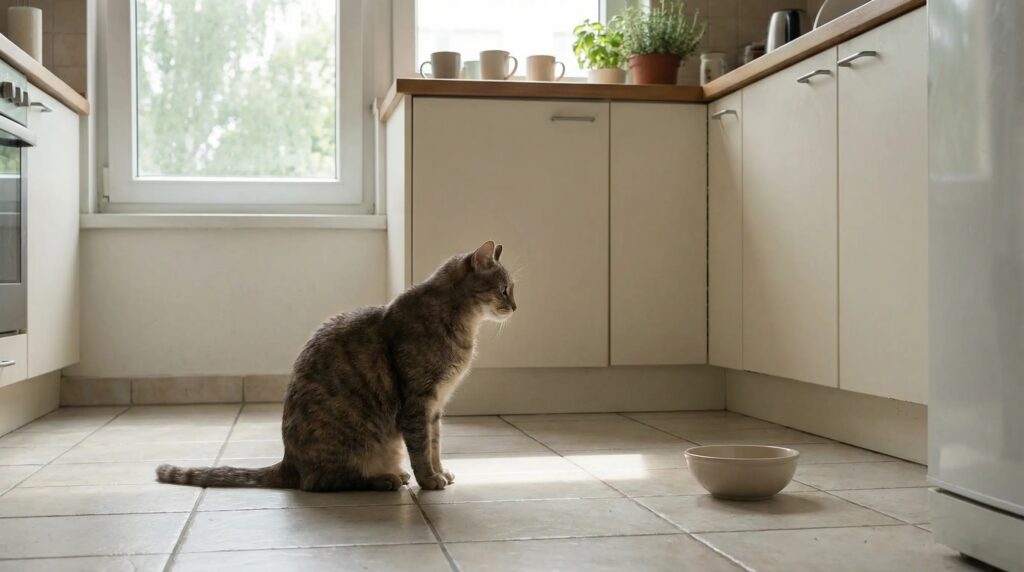
If your cat behaves as though every meal was their first meal in days, you are not alone. Many owners deal with a cat who finishes breakfast, returns to the bowl soon after, follows them into the kitchen, or meows whenever food is nearby.
Sometimes a cat genuinely needs more food. More often, constant food-seeking is connected to routine, boredom, fast eating, learned behavior, or a change in the cat’s health. The important part is to look at the whole pattern instead of assuming every request means hunger.
Short answer
A cat may seem hungry all the time because they have learned that asking for food gets a response, their meals are not keeping them satisfied, they are bored, or food has become their main activity. A sudden increase in appetite can also signal a medical problem, especially when it comes with weight loss, increased thirst, vomiting, or changes in the litter box.
Is your cat actually hungry?
Begging is not always the same as hunger. A cat can be perfectly well fed and still become very focused on food.
A cat who may truly need a feeding adjustment can show ongoing weight loss, low energy, a poor coat, or difficulty maintaining a healthy body condition. They may search for food throughout the day, even when they have regular meals and plenty to do.
A food-focused cat often looks different. They may be maintaining or gaining weight, acting energetic, and becoming most vocal around familiar food times. They might begin meowing the moment you enter the kitchen or when they hear a packet open, even if they have eaten recently.
Timing gives useful clues. Does the behavior happen at the same time every day? Does it happen only when you cook? Does your cat calm down after play or attention, even without food? Those details help identify the real reason.
Why cats seem hungry all the time
Your cat has learned that begging works
Cats are excellent at noticing patterns. If your cat meows near the bowl and you top it up, they learn that meowing may bring food. If they sit beside you while you eat and receive a small bite, they learn that staying close is worthwhile.
From your cat’s point of view, the pattern is simple: ask for food, sometimes get food, keep asking.
This is not stubbornness or bad behavior. It is normal learning. In fact, inconsistent rewards can make the behavior especially persistent. If food appears only sometimes after a demand, your cat may keep trying because they do not know which attempt will work.
Watch what happens after the begging begins. Do you talk to your cat, walk into the kitchen, pick up the bowl, or offer a treat to stop the noise? Even small reactions can reinforce the routine.
Meals may be too small or too far apart
Some cats really are hungry between meals. This can happen when portions are too small for their needs, meals are spaced too far apart, food is shared with another cat, or the cat is growing, nursing, or especially active.
Check whether your cat is actually receiving their own portion. In multi-cat homes, one cat may quietly eat more than their share. Feeding cats separately for a few days can reveal whether the hungry cat is missing food or simply wants more.
Do not make large changes based on begging alone. Measure the daily food amount, check the feeding guidance for the food you use, monitor body condition, and ask your veterinarian when you are unsure. A cat who finishes meals quickly is not automatically underfed.
Your cat is bored
For many indoor cats, food is the most exciting event of the day. When there is little else to do, thinking about the next meal becomes entertainment.
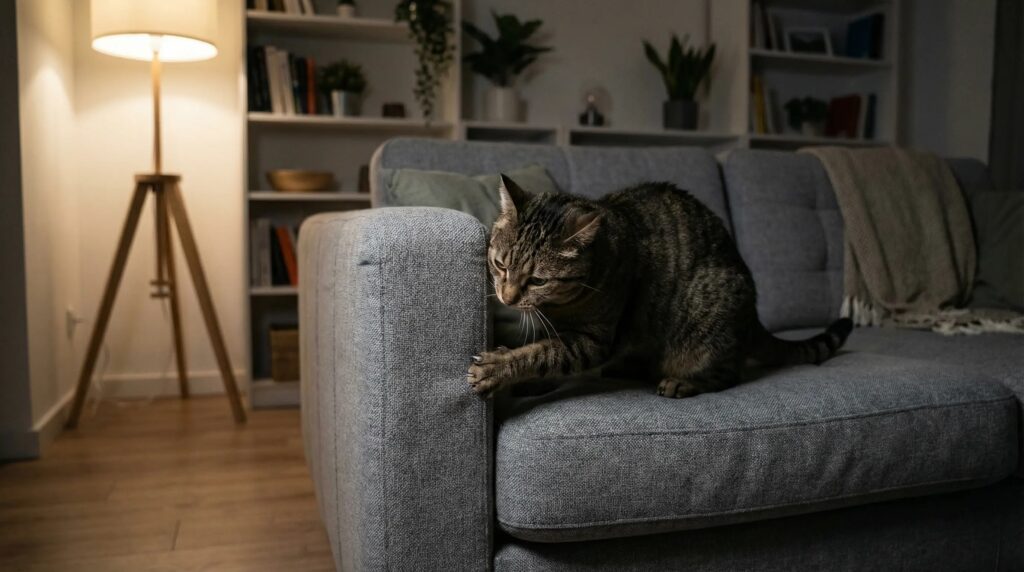
Boredom is especially likely when food-seeking happens alongside following people, knocking objects over, scratching furniture, excessive meowing, or restlessness in the evening. In those cases, adding more food often does not solve the problem. The cat needs more activity.
See Why Is My Cat Bored? for practical enrichment ideas. Short interactive play sessions, a window perch, climbing space, toy rotation, and simple food puzzles can give a cat a much better outlet than begging.
Food has become a source of attention
Food is not always the reward. Your response can be rewarding too.
A cat may learn that vocalizing gets them eye contact, conversation, petting, or a trip to the kitchen. If they feel lonely or under-stimulated, any reaction from you can make the behavior worth repeating.
Try offering attention before the demands start. If your cat usually becomes food-focused in the evening, schedule a short play session or calm interaction before that time. This gives them connection without teaching that meowing is the best way to get it.
The routine is too predictable
Cats like routine, but an extremely fixed routine can create intense anticipation. If breakfast always appears at exactly 6:00 a.m., your cat may start asking at 5:45, then gradually earlier if you sometimes feed them to get more sleep.
This is one reason cats wake people before breakfast. If nighttime or early-morning vocalizing is part of the pattern, read Why Is My Cat Meowing at Night?. Food expectations, boredom, natural activity rhythms, and accidental reinforcement often overlap.
An automatic feeder can help in some homes. It removes you from the food equation, so your cat is less likely to believe that waking or following you makes food appear.
Your cat eats too quickly
Some cats finish a normal meal in seconds and immediately search for more. Fast eating can leave them feeling unsatisfied and may lead to vomiting shortly after meals.
Slow things down with a puzzle feeder, a slow-feeding bowl, a lick mat for suitable wet food, or several small portions placed in safe locations. Start with an easy puzzle. The purpose is not to frustrate your cat, but to make eating more mentally engaging.
A short play session before food can help too. It follows a natural sequence: hunt, eat, rest. For many cats, that routine feels more satisfying than food alone.
How to tell whether your cat needs more food
Look at your cat’s body and overall health, not only the empty bowl.
A cat who may need more calories can have visible weight loss, prominent ribs or hips, low energy, or a poor ability to maintain condition. But body shape varies, and it is easy to misjudge by eye. Your veterinarian can help you assess whether your cat is underweight, at a healthy weight, or carrying extra weight.
Avoid free-feeding just to test the theory. Some cats will continue eating when food is available even if they have had enough calories. That can create weight gain without fixing the food obsession.
When constant hunger may be a medical sign
A sudden increase in appetite deserves attention, particularly in an adult or senior cat.
Contact a veterinarian promptly if increased hunger appears with weight loss, drinking much more water, larger urine clumps, vomiting, diarrhea, restlessness, weakness, coat changes, confusion, or a swollen belly.
Conditions such as diabetes, thyroid disease, intestinal problems, parasites, and medication side effects can affect appetite. Only a veterinarian can diagnose the cause.
The combination of eating more while losing weight is especially important. Do not wait for weeks to see whether it settles on its own.
What to do instead of feeding every time your cat begs
Measure daily food
Use a measured daily amount rather than topping up the bowl whenever it looks empty. Divide that amount into several meals if your cat does better with smaller, more frequent portions.
Make any food change gradually. Sudden changes in diet or portion size can upset the stomach and increase anxiety around food.
Add play before meals
Try ten to fifteen minutes of interactive play before one or two meals. A wand toy that lets your cat stalk, chase, and catch works well.
Finish with a meal or a small portion. That hunt, eat, rest pattern can reduce restlessness and make meals feel more complete.
Make meals more engaging
Use a puzzle feeder for one small meal each day, scatter a safe portion of dry food in easy locations, or offer wet food on a lick mat. These options slow eating and add mental stimulation.
Start simple. A puzzle that is too difficult can cause frustration. Your cat should be able to understand how it works quickly.
Give attention before demands begin
If your cat usually begs at a predictable time, be proactive. Offer play, calm company, or a toy before the food-seeking starts.
This helps replace the old pattern of cat begs, owner reacts, cat begs earlier tomorrow.
Do not use treats to end every meowing session
Treats are useful when they reward calm behavior or help with training, but they should not be the automatic response to every demand.
When your cat asks for food, try redirection first: a short play session, a puzzle toy, access to a favorite perch, or calm attention. Reward quiet, relaxed behavior rather than the demanding meow.
Common mistakes that make begging worse
Feeding to stop the noise
Giving food to stop a persistent cat works in the moment, but it usually teaches the cat to ask sooner next time. When you change the routine, the behavior may briefly become more intense before it improves. That does not necessarily mean the new approach is failing.
Too many treats
Treats add calories quickly and can keep a cat focused on food. Keep them small and count them as part of the day’s total intake.
Ignoring enrichment
A cat with little stimulation may treat food as their only reliable activity. Regular play, safe climbing areas, hiding spots, toy rotation, and window views can make a real difference.
Assuming every request is genuine hunger
Your cat is communicating something, but it may be anticipation, boredom, attention-seeking, or stress. Context is more informative than the sound of the meow.
A simple seven-day plan
For one week, measure your cat’s daily food and keep meals regular. Add a short play session before at least one meal. Use an easy puzzle feeder for a small portion each day. Avoid offering food immediately after begging. Write down when the behavior happens and what happens just before it.
Also monitor weight, thirst, energy, appetite, and litter-box habits. By the end of the week, a pattern often becomes clear. Perhaps your cat begs only when you cook, after a long inactive afternoon, or before bedtime. That information makes the next step much easier.
Key takeaway
A cat who always seems hungry is not necessarily underfed. Many cats are responding to habit, fast eating, boredom, predictable routines, or the attention connected to food.
Measure meals, make eating more engaging, add play and enrichment, and avoid rewarding every demand with food. But if a larger appetite comes with weight loss, increased thirst, vomiting, or a sudden behavior change, contact a veterinarian.